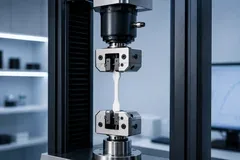
This guide breaks down plastic flexural testing (3-point bending) as defined by ASTM D790 and ISO 178. Discover what properties like Flexural Modulus are measured, understand the standard requirements for equipment and specimens, and learn the basic procedure for performing this vital test on plastics.
What is Flexural Testing?
Flexural testing, also known as a bend test, measures a material's behavior when subjected to bending. Unlike tensile testing (which pulls) or compression testing (which pushes), flexural testing applies force perpendicular to the material's long axis.
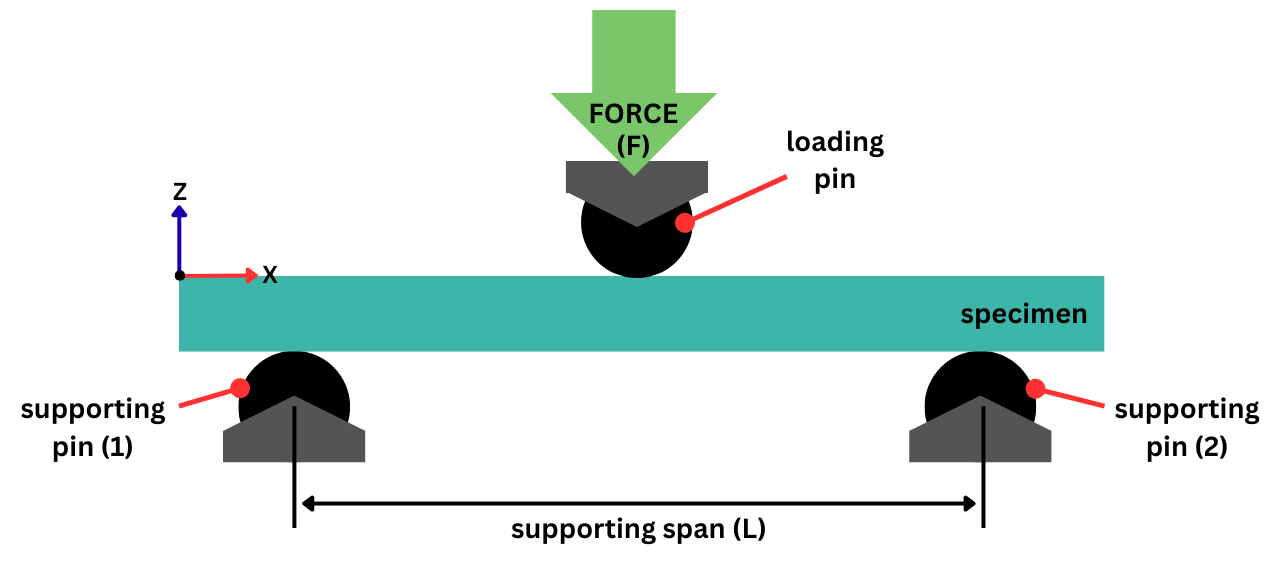
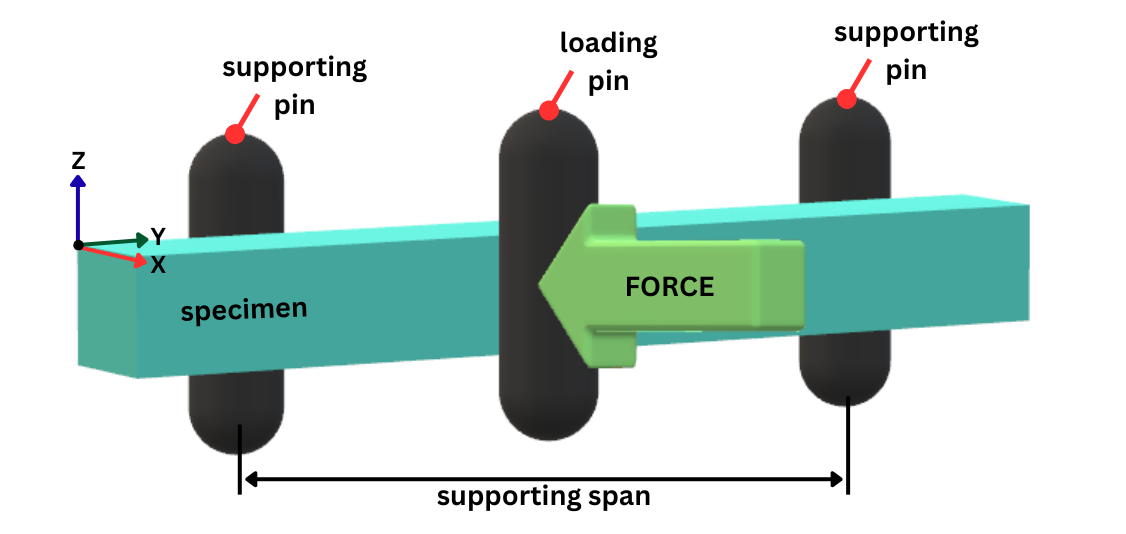
For plastics, the most common type is the 3-point bending test. In this setup, a rectangular specimen rests on two supports (an outer span), and a loading nose applies a force directly in the center of the span. This test is crucial for materials used in applications where they must withstand bending stress, like fan blades, power tool casings, dashboards, or other structural components.
What Does it Measure?
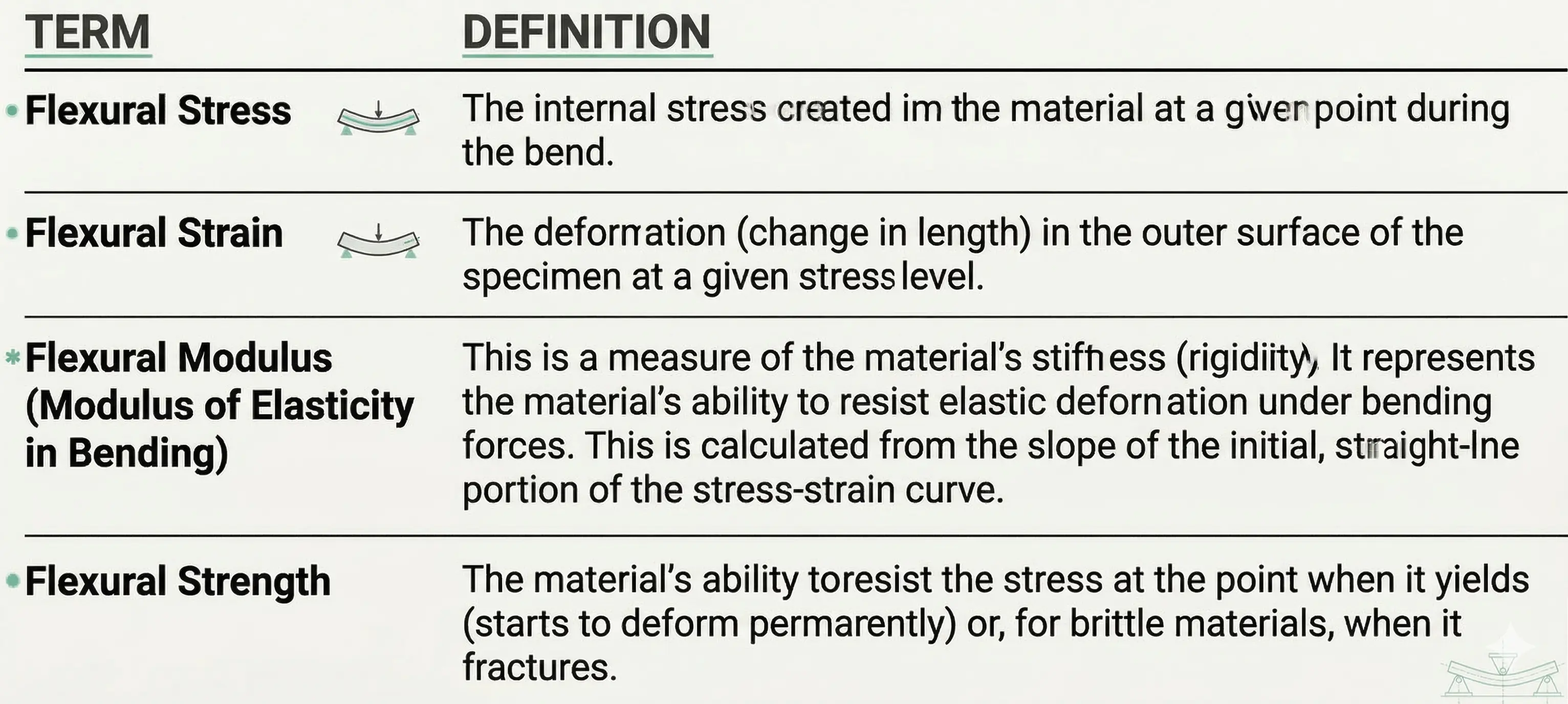
The test generates a flexural Stress vs. Strain curve. From this data, the following key properties are calculated:
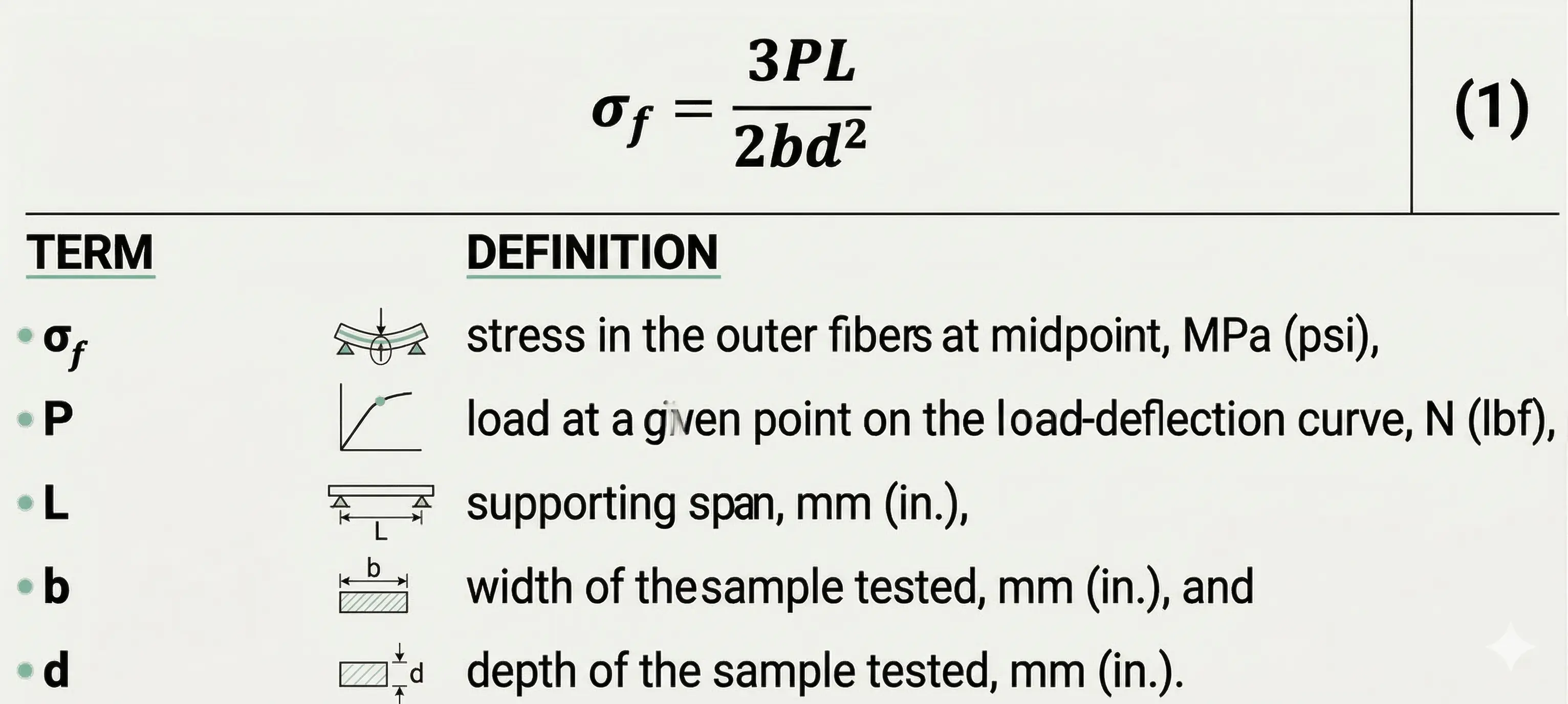
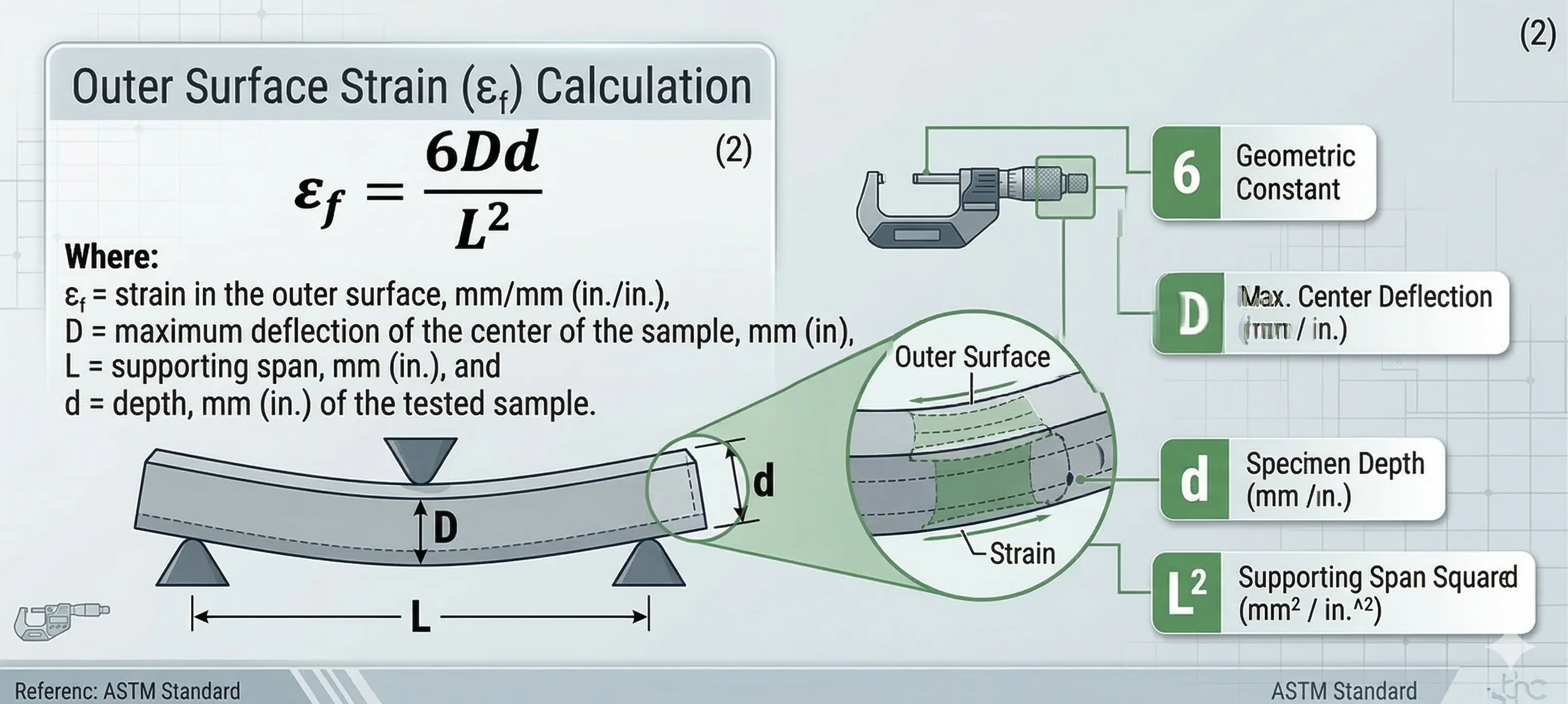
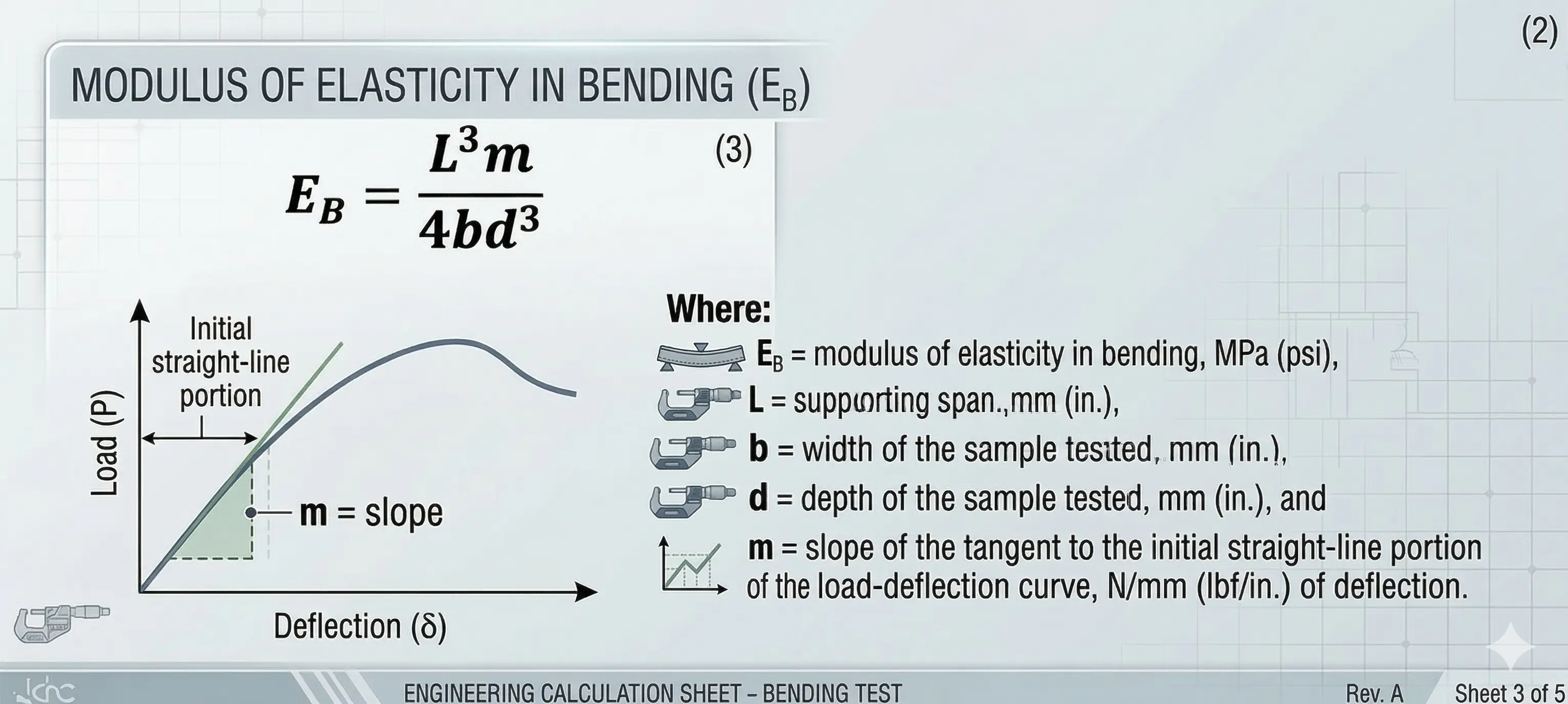
The ASTM D790 standard, quantifies flexural stress (σf), strain (εf) and modulus (EB) using the following three equations, respectively. Note that d (depth) is the dimension in the direction of loading (i.e., the thickness of the specimen, the dimension through which the load is being applied through), and b (width) is the dimension perpendicular to loading, along the width of the specimen
3-Point Versus 4-Point Bending Tests - What is the Difference?
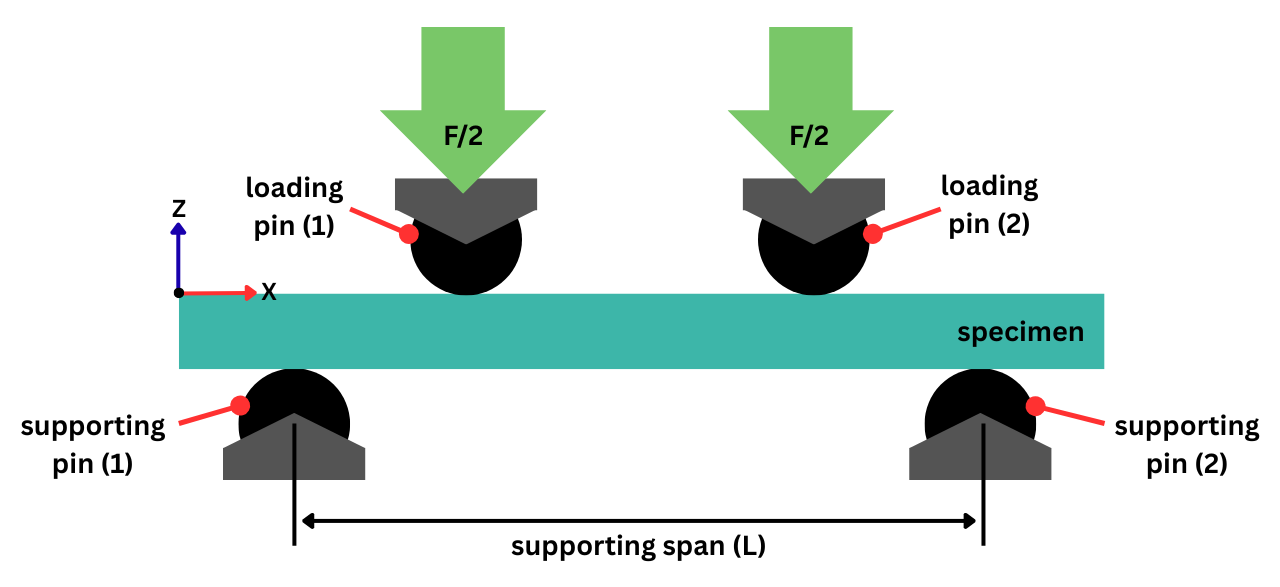
The 3-point bending test method (Fig. 2(a)) concentrates the maximum flexural stress at a single point, the center of the specimen. This makes it an ideal choice for rapid strength checks, as the required equipment is often more affordable and the testing fixture is typically easier to set up and handle.
In contrast, 4-point bending (Fig. 2(b)) distributes the peak stress across a longer, central span between the two inner load points. This configuration provides a more uniform stress distribution, which can be superior for accurately measuring the flexural strength and modulus of certain materials. This benefit is particularly notable for anisotropic materials like fibre-reinforced composites or 3D-printed parts, where material properties may vary along the specimen's length.
When Should You Use ASTM D790 or ISO 178?
Both ASTM D790 (American Society for Testing and Materials) and ISO 178 (International Organization for Standardization) are the primary global standards for determining the flexural properties of plastics.
- ASTM D790: This standard is widely used in North America and is a foundational method for characterizing plastic stiffness and strength. It offers two main testing procedures (Method A for slower rates and Method B for faster rates, often used for quality control).
- ISO 178: This standard is preferred in Europe and by international companies. While the principles are like D790, there are differences in the specific testing speeds, deflection limits, and calculations.
Choosing which standard to use usually depends on the geographic market where the product will be sold or the requirements of the customer. By following these procedures, engineers can ensure that the test results are reliable and comparable across different studies/materials and applications.
ASTM D790 Test Specimens
The sample shape is always a simple rectangular bar. Common dimensions are a width of 12.7 mm, thickness of 3.2mm and length of 127mm. The exact dimensions can vary based on the material's thickness, where ASTM D790 defines specimens as:
- Standard Specimen: A specimen that is 3.2 mm (0.125 in) thick. This thickness is often preferred for general comparison.
- Non-Standard Specimens: Used for materials thicker or thinner than the standard, but the span-to-depth ratio (the distance between the two supports divided by the thickness of the sample) must be maintained. For ASTM D790, this ratio is typically set at 16:1.
ISO 178 Test Specimens
The ISO 178 standard for 3-point bending tests specifies a preferred bar specimen with dimensions of 80 mm (± 2 mm) long, 10 mm (± 0.2 mm) wide, and 4 mm (± 0.2 mm) thick.
Equipment Requirements
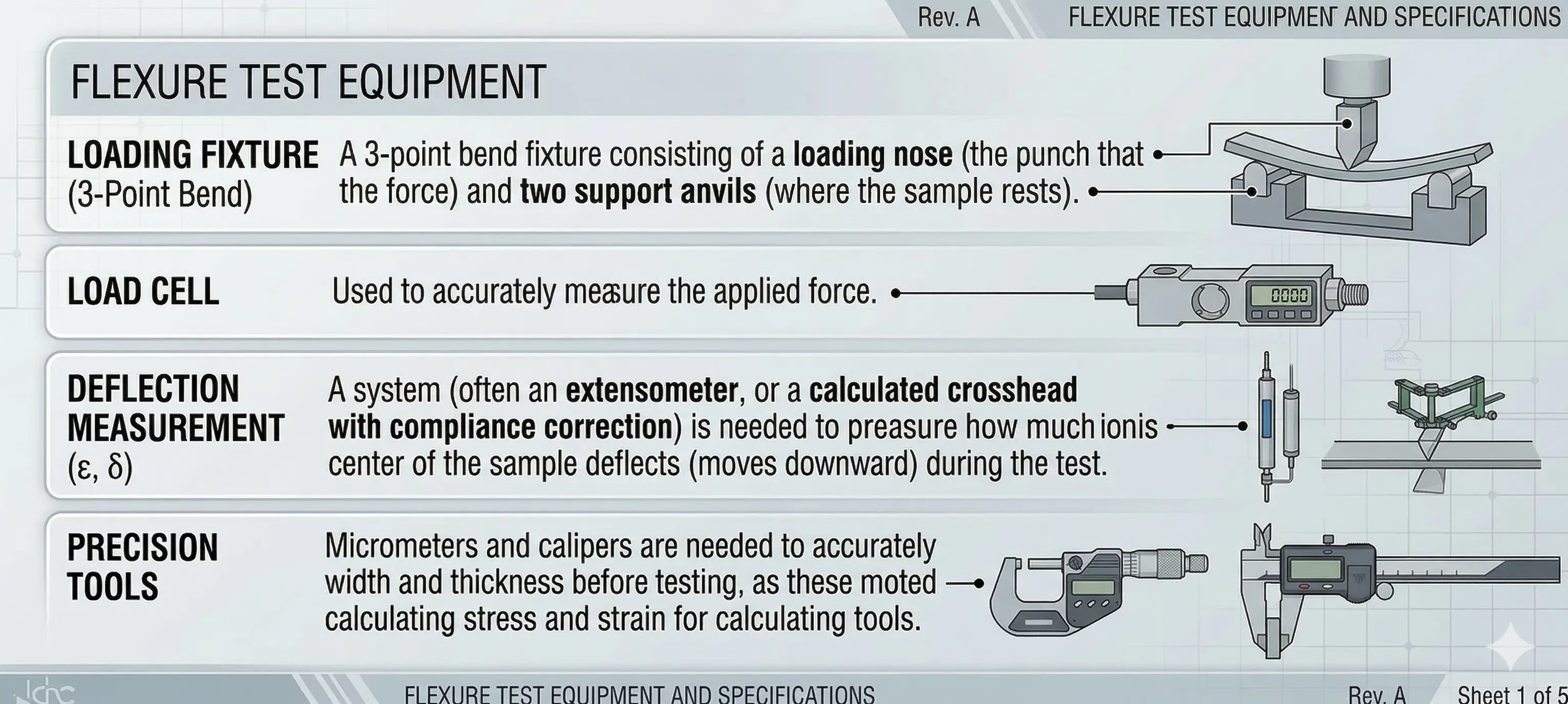
A universal testing machine (UTM) is required, equipped with the following specific tools:
How to Perform a Flexural Test (3-Point Bending Test)
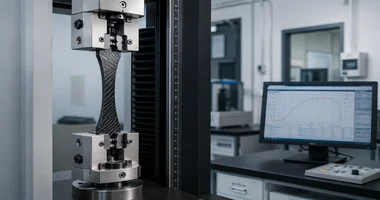
The test procedure is outlined below, where the set-up is shown in Figures 1 and 3:
- Measure Specimen: Accurately measure the width and thickness of the rectangular specimen.
- Set Span: Adjust the distance between the two support anvils to achieve the required span-to-depth ratio (e.g., 16:1 for D790 Method A).
- Place Specimen: Center the specimen on the two supports.
- Apply Load: The loading pin is driven downward at a specified rate (as defined by the standard) applying force to the center of the span.
- Record Data: The UTM continuously records the applied load and the resulting deflection.
- Stop Test: The test stops when the specimen fractures, or when the strain reaches a specified limit (often 5.0% in D790) if the material is too flexible to break.
Calculate Results: The recorded load and deflection data, combined with the specimen's dimensions, are used to calculate the Flexural Modulus and Flexural Strength.
From Manual Setup to Automated Precision
The steps outlined above represent the traditional "hands-on" approach to materials testing. In a standard UTM, an operator spends significant time manually adjusting the span, centering the specimen by eye, and using handheld micrometers to input dimensions—all of which introduce "the human element" and potential data variance.
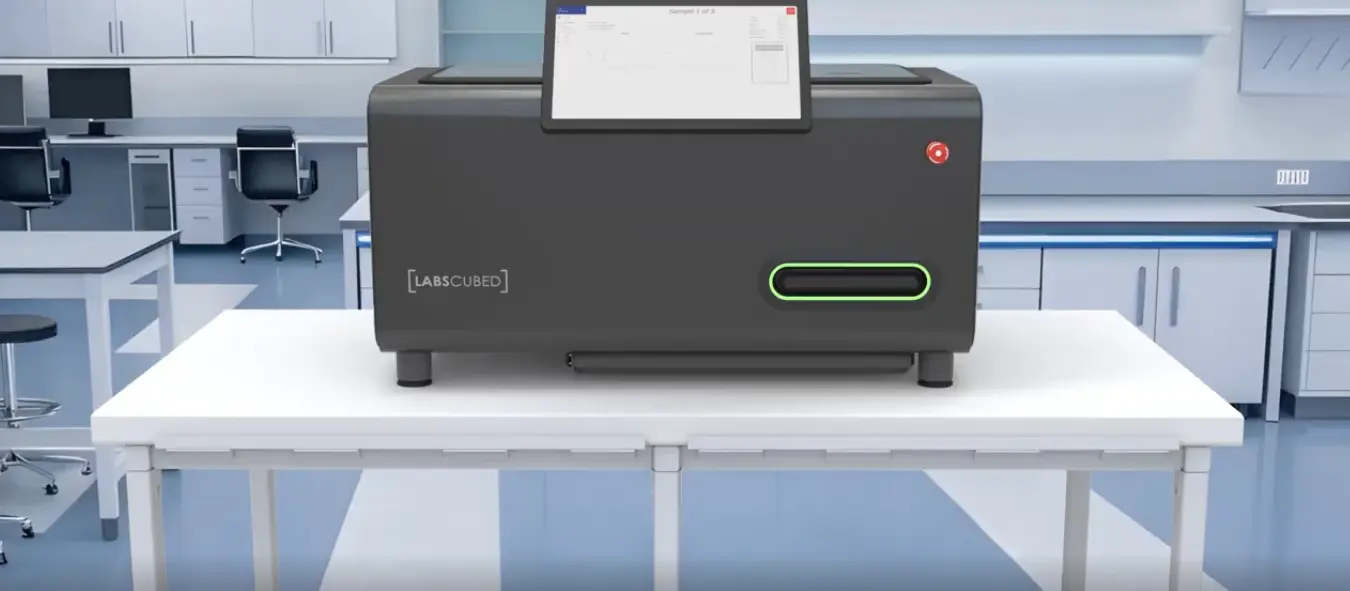
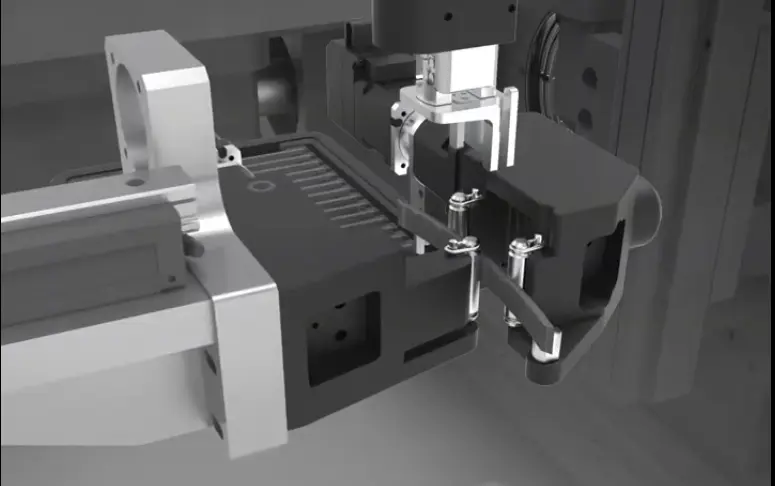
The CubeFlex redefines this workflow by performing the 3-point bending test horizontally (Fig. 3). In this configuration, the primary concern is not the orientation of the specimen relative to gravity, but the absolute precision of the specimen’s alignment and dimensions.
By removing the manual "touchpoints" of the test, CubeFlex ensures that your data is governed strictly by the material's properties. Key features that maintain this integrity include:
- Envision System Alignment: Our integrated vision system automatically centers the specimen between the supports and under the loading pin. This guarantees that maximum stress occurs exactly at the midpoint, as required by the flexural stress formula, without an operator needing to "eye" the placement.
- Auto-Width & Auto-Thickness Measurement: Operators no longer need to manually measure samples with calipers and type in the data. CubeFlex automatically captures the width and thickness of the sample with high-precision sensors, feeding these variables directly into the ASTM and ISO equations for instant, error-free calculations.
- Horizontal Stability: Testing "sideways" allows for a more stable loading environment for automation. Because the loading and support noses are aligned horizontally, the system can more easily transport samples from a tray to the testing zone without risking the specimen falling or tilting during the transition.
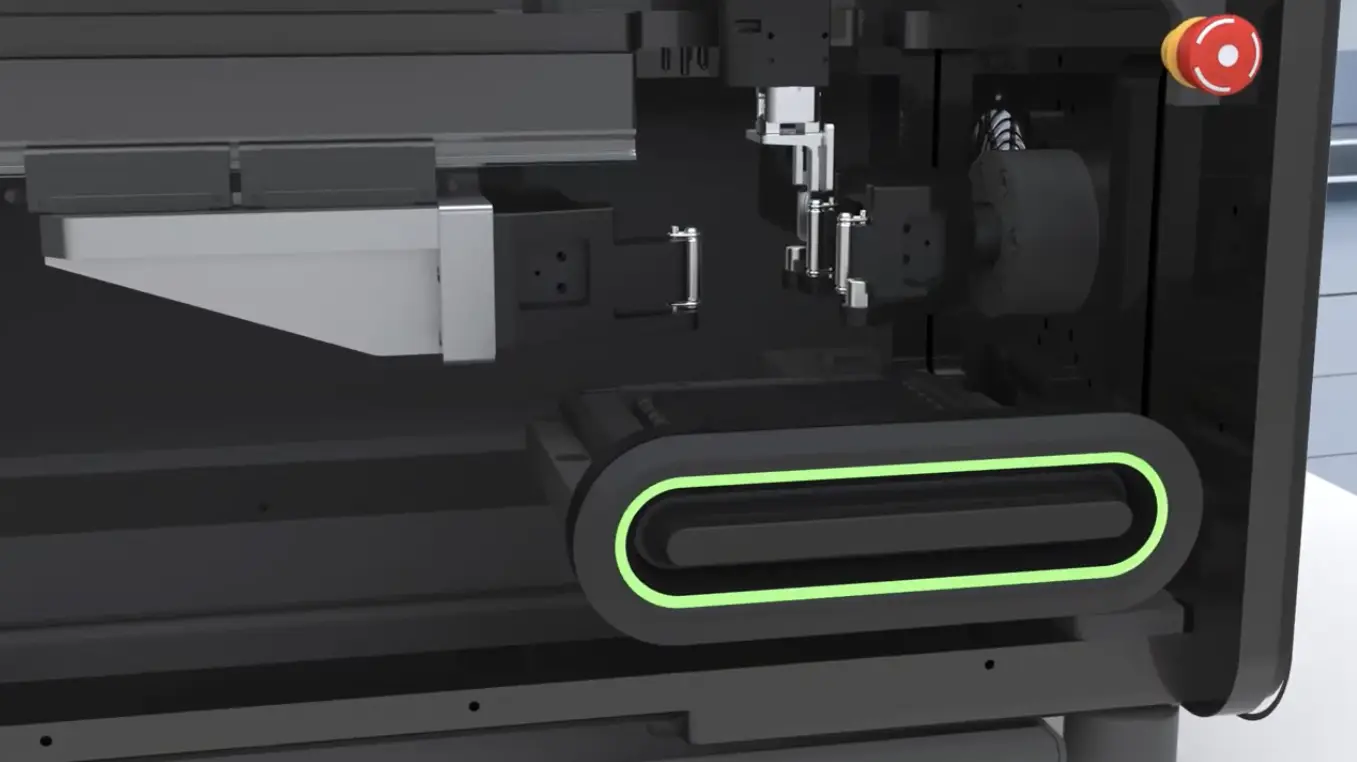
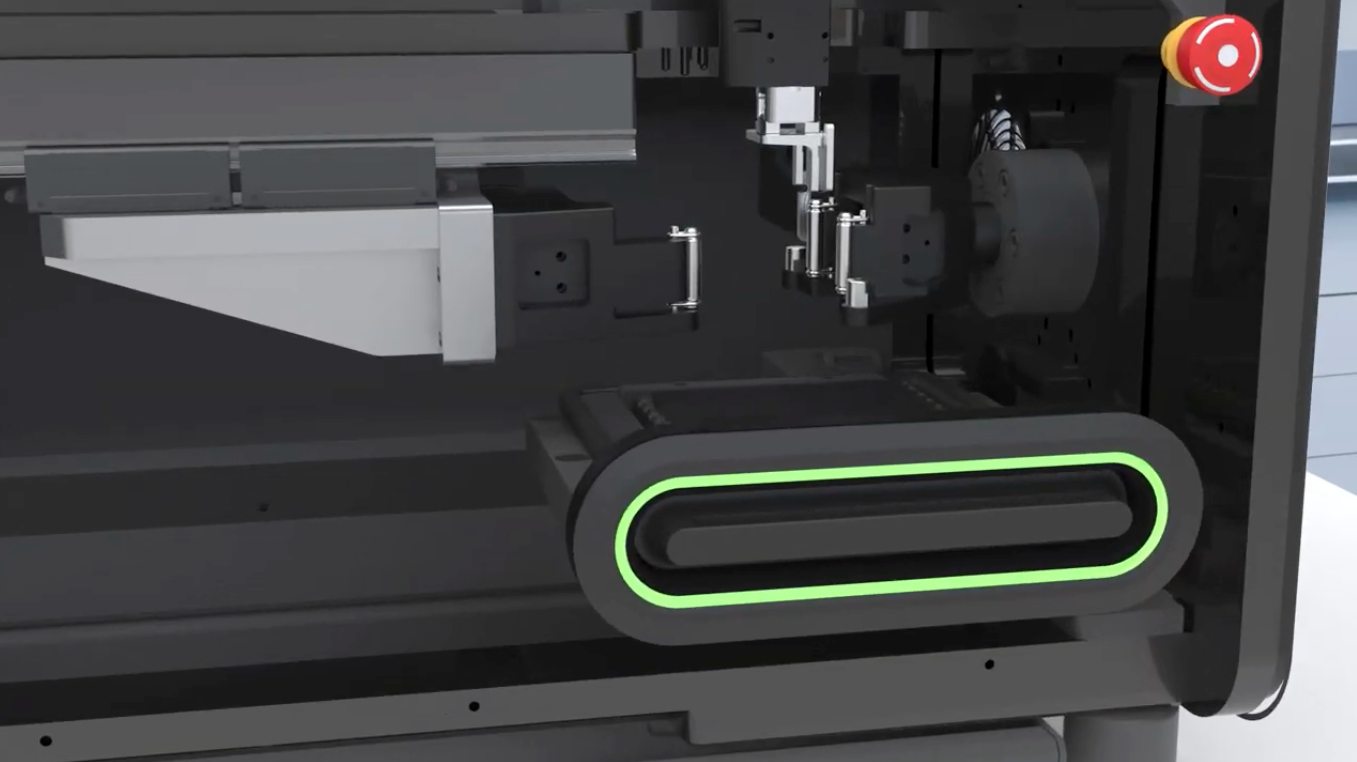
The images and diagrams throughout this article illustrate the traditional landscape of flexural testing. For decades, the industry standard has relied on Universal Testing Machines (UTM) where samples are loaded manually in a vertical orientation. While these systems are the bedrock of material science, they often introduce "the human element"—the time-consuming process of changing heavy grips, manual calibration, and the risk of inconsistent results due to improper sample handling or alignment.
CubeFlex reimagines this process. While the previous figures showed the traditional vertical 3-point bend, our technology transitions this test into a horizontal, fully automated workflow.
Efficiency Without Compromise
A common question arises when seeing a horizontal setup: Does the orientation affect the data? The answer is a definitive no. Whether a sample is bent vertically or horizontally, the physics of the flexural stress and strain remain governed by the same mechanical laws.
By moving to a horizontal plane, CubeFlex maintains 100% data integrity while solving the logistical bottlenecks of the lab.
Why Choose CubeFlex for Your Lab?
- Zero-Touch Automation: Eliminate the need for operators to manually change grips or recalibrate between tests. Once the samples are loaded into our specialized trays, the machine handles the rest.
- Multitasking Capabilities: Lab efficiency is doubled. Operators can now run tensile and flexure testing simultaneously. Simply configure your sample map on the CubeFlex touchscreen, and the system manages the distinct parameters for each test type automatically.
- Error Reduction: Automated loading ensures that every specimen is centered perfectly between the supports, eliminating the alignment errors that often plague manual UTM setups.
Guaranteed Compliance to Global Standards
Innovation doesn't mean moving away from the rules. CubeFlex is engineered to follow the exact geometries, span-to-depth ratios, and loading speeds required by international governing bodies. We ensure your data is "apples-to-apples" with any traditional machine.
Flexure Testing (3-Point): ASTM D790 / ISO 178 - Flexural Modulus, Strength, and Strain
Tensile Testing: ASTM D638 / ISO 527: Tensile Strength, Elongation, Young's Modulus
In Summary
Flexural testing, governed by standards like ASTM D790 and ISO 178, is essential for selecting plastics for parts that need stiffness and strength, i.e., fan blades, power tool casings, automotive components, etc. Understanding the 3-point bending method and its specific requirements ensures reliable data. By accurately measuring properties like Flexural Modulus, engineers can confidently select the right material, ultimately leading to more durable and safer products.