.webp)


Automated Tensile Testing: How Labs Cut Cycle Time Up to 85%
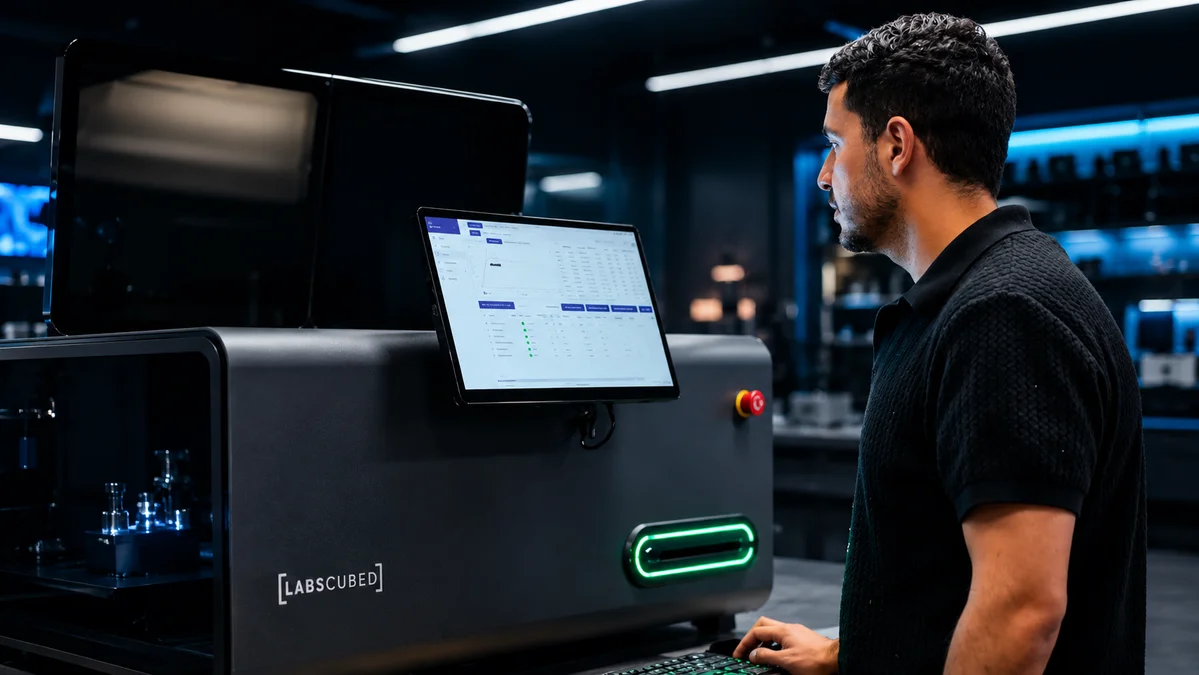
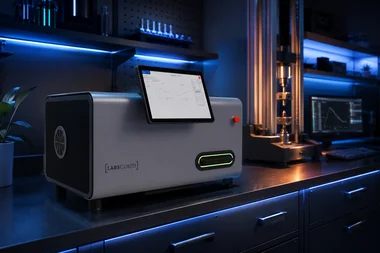
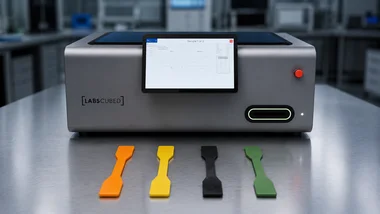
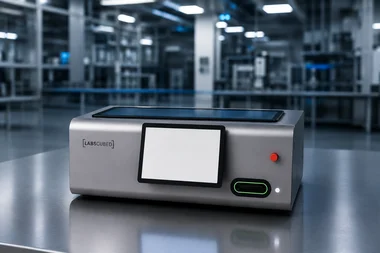
When technicians spend more time loading specimens, adjusting grips, and recording results than actually running tests, the bottleneck is no longer the tensile testing machine — it is the workflow around it. Automated tensile testing integrates specimen handling, test execution, and data collection into one repeatable process. LabsCubed's CubeOne and CubeTen systems combine robotics, AI-powered vision, and digital reporting to help labs improve consistency while scaling capacity.
In plastics, rubber, and composite manufacturing, tensile testing sits directly between production and material release. Delays slow quality approval and downstream operations, and as volumes grow, manual workflows introduce variability and cap throughput.
less testing cycle time, up to
When specimen handling, test execution, and reporting are automated into one continuous workflow, the manual steps between tests — not the pull itself — are what disappear.
Why manual tensile testing creates bottlenecks
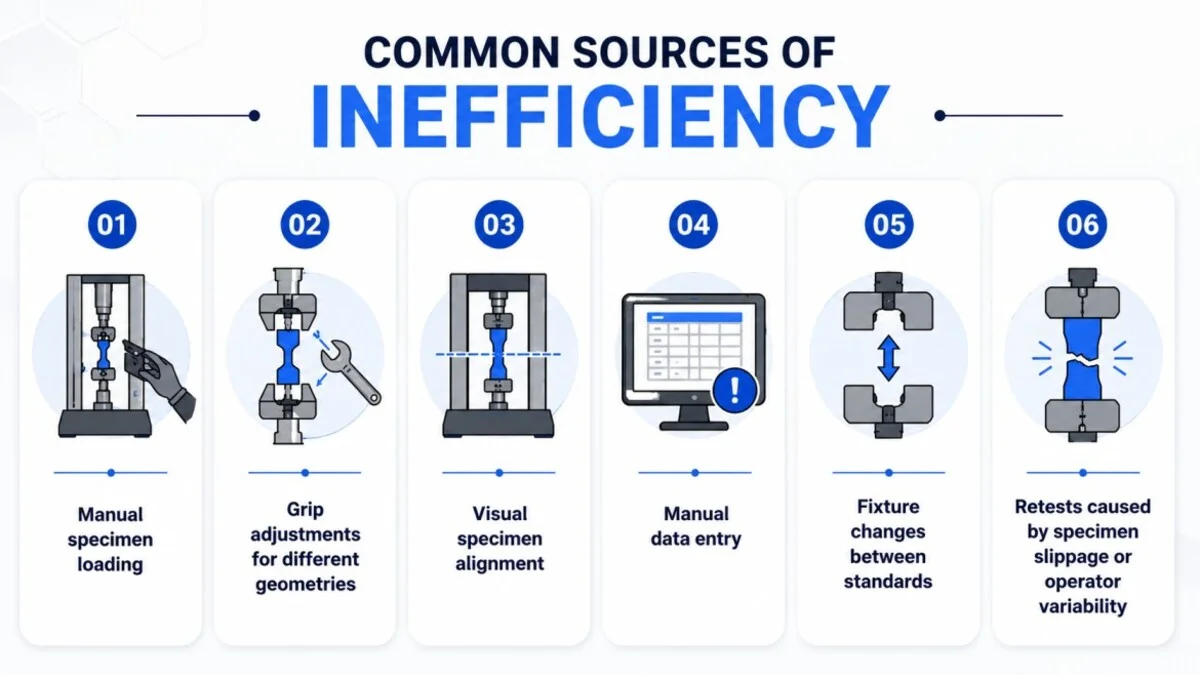
Most delays occur between tests rather than during the test itself. As throughput increases, these small delays accumulate and reduce machine utilization. Manual workflows also affect data quality: small differences in grip seating, specimen centering, and parameter setup increase data scatter and make repeatability harder to maintain.
What does automated tensile testing look like?
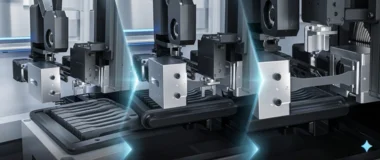
Automated tensile testing removes manual intervention from specimen handling, test execution, and reporting. A typical workflow runs as a continuous loop, letting one operator supervise several systems at once.
Load
Specimens are placed into a tray or feeder — no per-specimen clamping.
Transfer
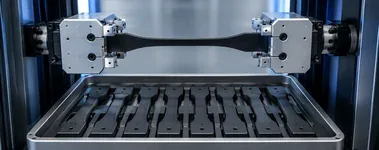
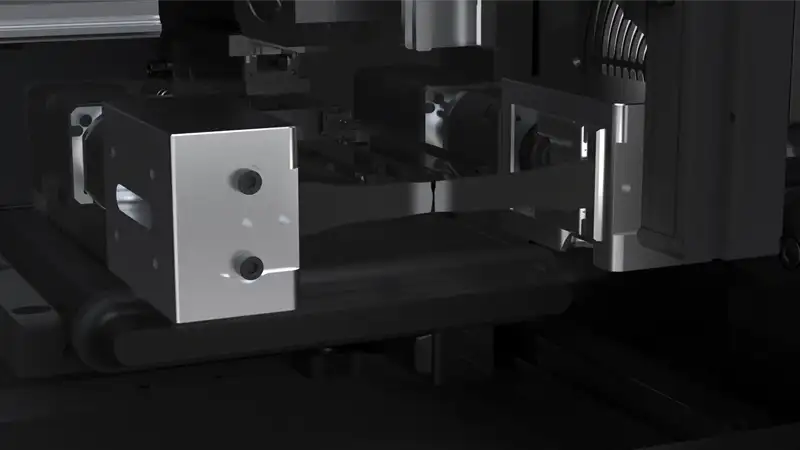
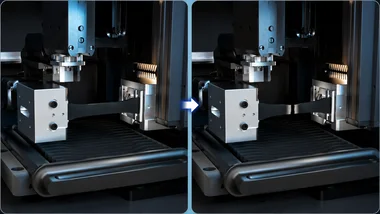
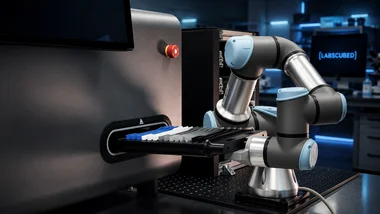
A robotic system moves each specimen from the tray to the testing area.
Verify
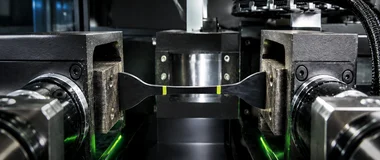
AI-assisted vision confirms positioning and alignment before the pull.
Test
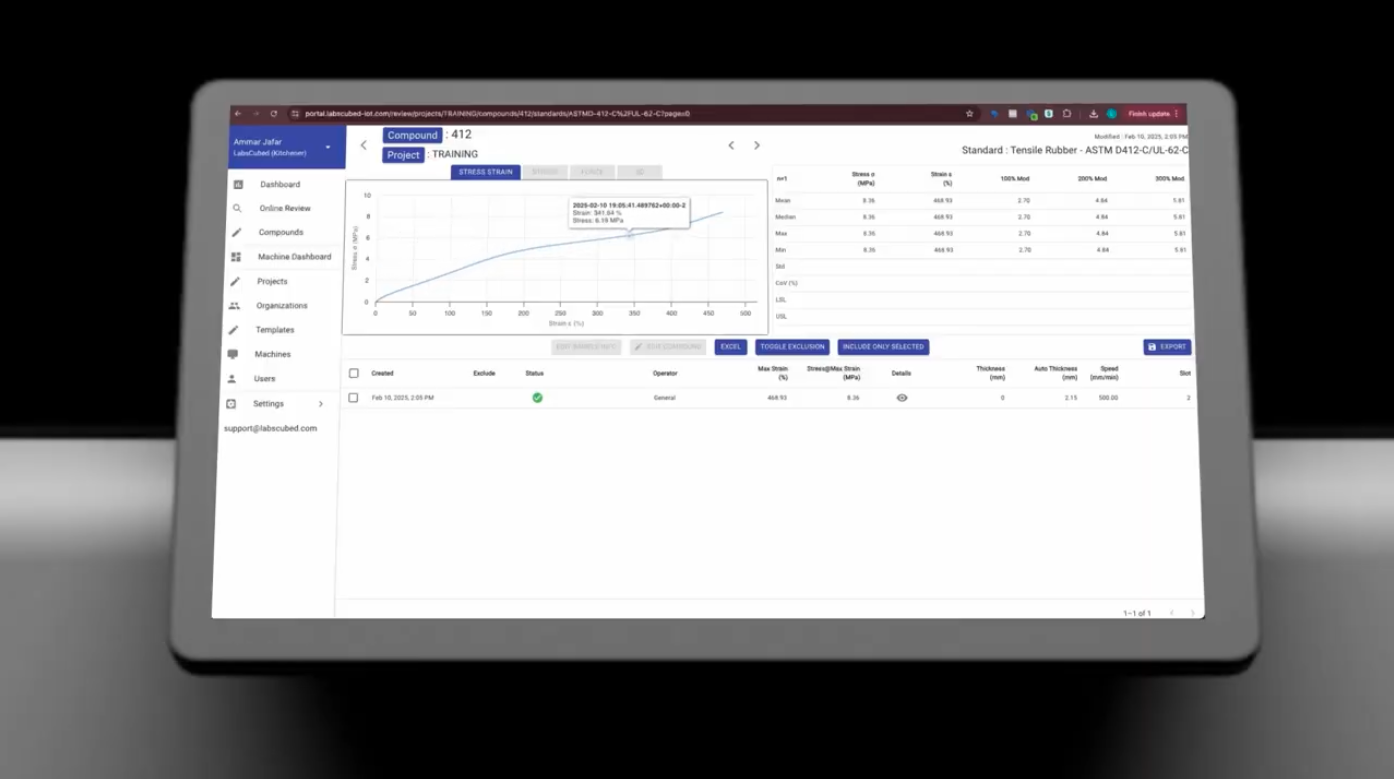
The test runs to predefined ASTM or ISO parameters; stress-strain data is captured automatically.
Log
Results are linked to specimen IDs, stored digitally, and the system advances to the next specimen.
See an automated cell in action: automated tensile testing for elastomers and rubber.
Manual vs. automated tensile testing
The biggest advantage is often not speed alone. Reducing operator variability improves process consistency and data reliability across large batches.
| Manual workflow | Recommended Automated workflow | |
|---|---|---|
| Specimen loading | Manual specimen loading | Robotic specimen handling |
| Alignment | Visual alignment | Consistent positioning |
| Reporting | Spreadsheet reporting | Automated data capture |
| Setup | Operator-dependent setup | Improved repeatability |
| Utilization | Limited utilization | Continuous operation |
| Traceability | Higher risk of transcription errors | Better traceability |
How automation improves data quality
Consistent specimen handling and digital data collection reduce variability throughout the testing process. This is especially valuable when testing elastomers and high-elongation materials, where small differences in grip positioning or strain distribution can affect results. Automation helps maintain:
- Consistent grip alignment — each specimen is seated against the same reference, every time.
- Repeatable test parameters — predefined methods run identically across operators and shifts.
- Reliable specimen tracking — every result is linked to a specimen ID at capture.
- Digital audit trails — timestamps and machine state are logged for every pull.
- Data traceability — results flow into LIMS without manual re-keying.
Supporting ASTM and ISO workflows
Automated tensile testing systems support a wide range of standards, including ASTM D638, ISO 527, ASTM D412, ISO 37, and ASTM D882. Rather than relying on manual setup for every batch, parameters are stored and executed automatically, improving repeatability and reducing setup time. For frame-selection guidance, see our tensile testing machine guide, the tensile strength tester buyer's guide for a buyer-mode walkthrough, or our tensile tester explainer for the equipment basics. For a broader look at the mechanical properties and testing of polymers those standards measure, start with our full QA guide, or see our survey of the other mechanical tests for polymers that sit alongside tension. For material-specific values, see our HDPE tensile strength guide.
How LabsCubed approaches automated testing
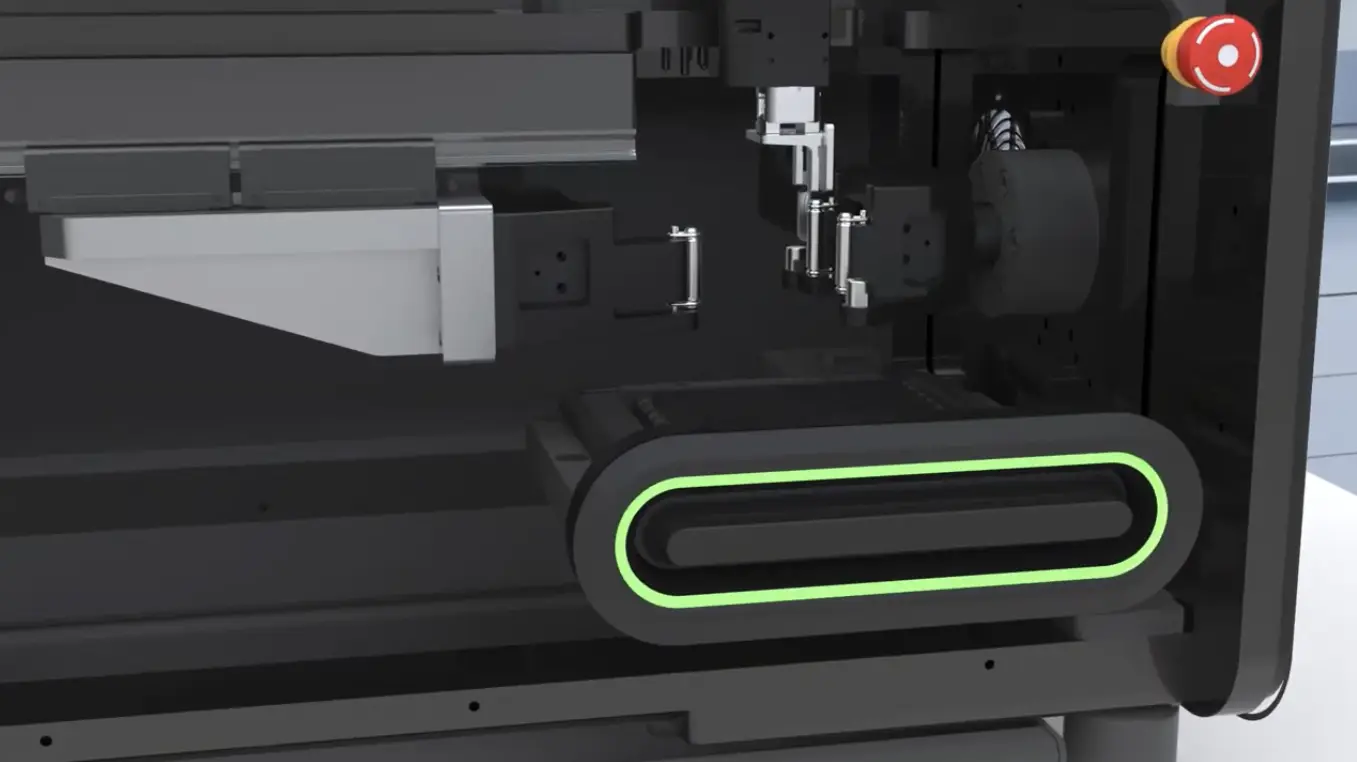
LabsCubed's CubeOne and CubeTen systems are designed as lab automation systems — workflow automation platforms rather than standalone testing machines. They combine robotic specimen handling, AI-powered vision, specimen validation, grip-seating verification, automated reporting, and digital audit-ready records. The objective is not simply to run tests faster, but to create repeatable workflows from specimen loading to final reporting. See the LabsCubed robotic arm in operation.
Frequently asked questions
What is automated tensile testing?
Automated tensile testing uses robotics and software to perform specimen handling, test execution, and data collection with minimal operator intervention. It integrates loading, alignment, the pull, and reporting into one repeatable workflow so operators can supervise multiple systems instead of running each cycle by hand.
How does automation improve throughput?
Automation reduces time spent on specimen loading, grip adjustments, and manual reporting, allowing laboratories to process more specimens with greater consistency. Because most delays occur between tests rather than during them, removing that manual work is what raises machine utilization.
Which standards are commonly used?
Automated systems commonly support ASTM D638, ASTM D412, ISO 527, ISO 37, and ASTM D882 depending on the material and application. Predefined methods are stored and executed automatically to keep results consistent between operators and batches.
Conclusion
As testing volumes grow, manual processes often become the limiting factor rather than the universal testing machine itself. Automated tensile testing helps laboratories improve repeatability, reduce operator variability, and increase throughput by integrating specimen handling, testing, and reporting into a continuous workflow. The same pattern applies to adjacent methods, from flexural to hardness testing for polymer composites. By combining robotics, AI-powered vision, and digital data collection, LabsCubed's CubeOne and CubeTen systems help plastics, rubber, and composite laboratories scale efficiently while maintaining confidence in their test data.
Reduce operator variability and improve throughput
Explore how LabsCubed's CubeOne and CubeTen systems automate tensile testing workflows from specimen loading to final reporting.
Related Articles
More expert insights and practical solutions to advance your material testing expertise.
Automated Rubber Tensile Testing Machines: A Guide for High-Volume Testing Labs
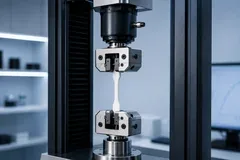
Universal Testing Machine: Complete Guide to Specifications, Applications & Automation
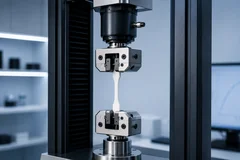
Tensile Strength Tester: A Buyer's Guide for QA Labs
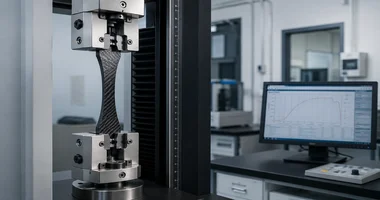
Tensile Test of Composite Materials: A Practical Guide
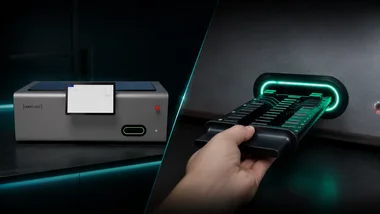
Universal Testing Machine for Rubber: 2026 Buyer Guide
ASTM D3039: How to Test Composite Tensile Properties
Robotic Material Testing: The Complete Guide to Automating Your Lab
Composite Material Testing: Methods, Standards, and Automation
Tensile Testing Machine Guide for Plastics & Rubber Labs
Polymer Tensile Test: Procedure, Standards & Automation
Polymer Mechanical Testing: Methods, Standards & Automation
Lab Automation Robotics for Plastics and Rubber QA Teams
How to Choose Plastics Tensile Testing Equipment
ASTM D638 Automated Testing: Run 3× More Specimens Per Day
Materials Testing Automation: How Plastics and Rubber Labs Run 3× More Tests Per Shift
ASTM D790/ISO 178 Explained: Everything You Need to Know About Plastic Flexural Testing

Fatigue Testing in Rubber Compounds: Understanding Long-Term Performance
How Temperature and Humidity Affects Tensile Strength in Plastics