.webp)


Robotic Material Testing: The Complete Guide to Automating Your Lab
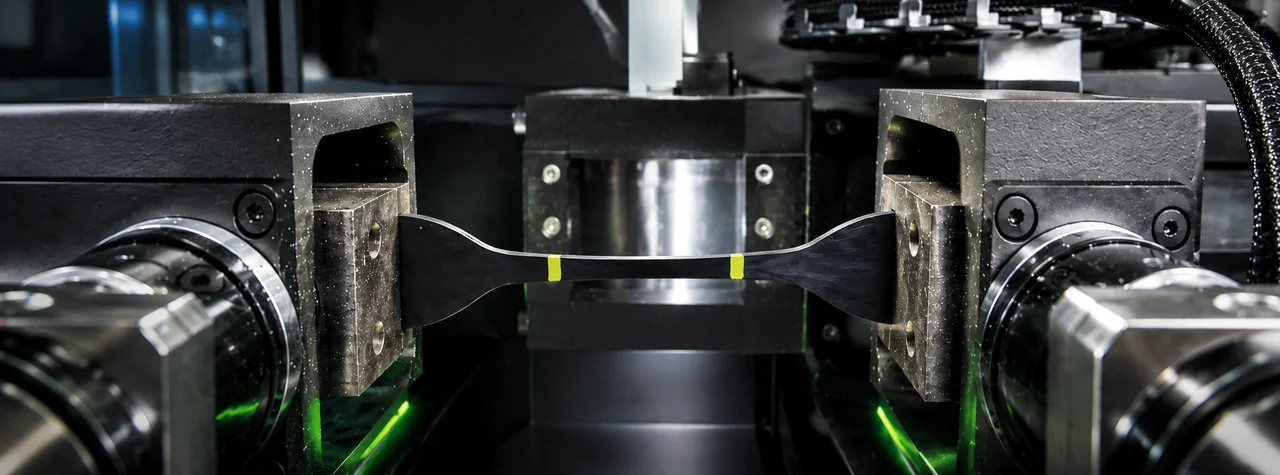
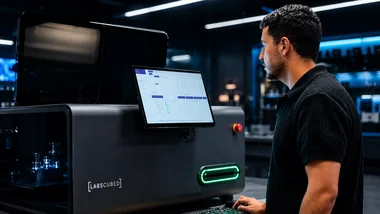
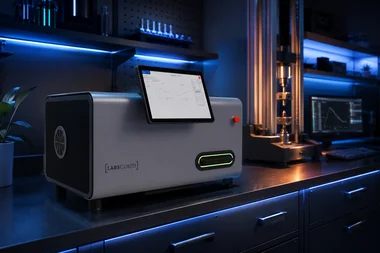
When technicians spend more time loading specimens and recording results than analyzing data, testing becomes a bottleneck rather than a quality tool. Robotic material testing replaces repetitive manual tasks with automated workflows — integrating specimen handling, test execution, and digital reporting into one repeatable process. LabsCubed's CubeOne and CubeTen platforms combine robotics, AI-powered vision, and automated data collection to help plastics, rubber, and composite labs improve repeatability while scaling throughput.
What is robotic material testing?
Robotic material testing uses automated systems to perform specimen handling, alignment, testing, and data collection with minimal operator intervention. The universal testing machine (UTM) remains at the center of the process — what changes is everything around it. Robotic systems automate:
- Specimen pick-and-place
- Grip positioning
- Test execution
- Data acquisition
- Result reporting
Instead of performing repetitive tasks, technicians can focus on reviewing data and supporting quality decisions.
What problems does robotic material testing solve?
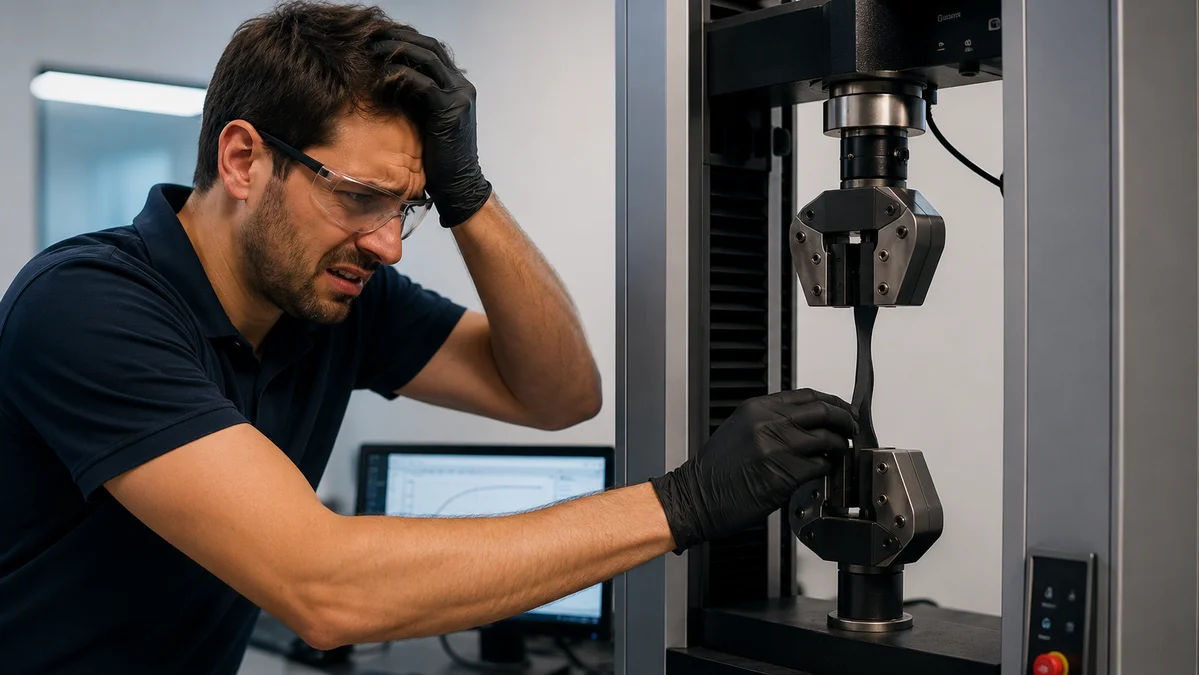
Manual workflows often involve individual specimen loading, visual alignment, grip adjustments, spreadsheet reporting, and repetitive setup steps. These activities consume time and introduce variation between operators. For high-volume labs, the challenge is often not the testing machine itself but the manual work between cycles. CubeOne and CubeTen address this through workflow automation — combining robotic specimen handling with AI-powered vision and automated reporting to create more repeatable test environments.
How does a robotic testing system work?
A robotic testing system automates specimen handling, test execution, and data capture to create a continuous workflow that supports unattended operation.
Load
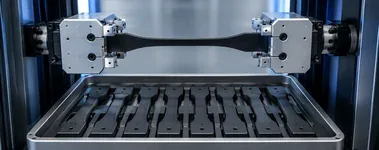
Specimens are placed into trays, ready for the system to handle.
Transfer
A robotic system transfers each specimen to the testing area.
Verify
AI-assisted vision verifies positioning before the test begins.
Test
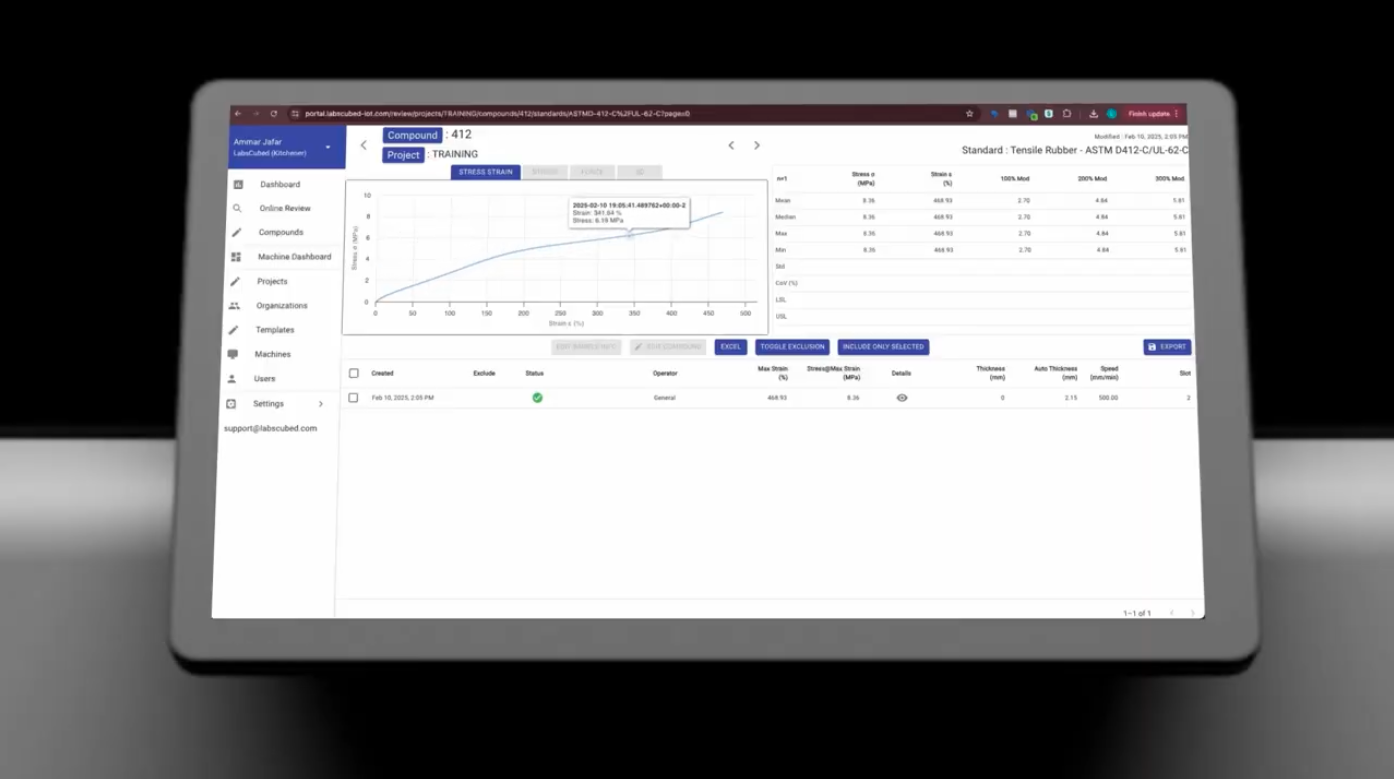
The test runs to predefined ASTM or ISO parameters; stress-strain data is captured automatically.
Log
Results are linked to specimen IDs and the system advances to the next specimen.
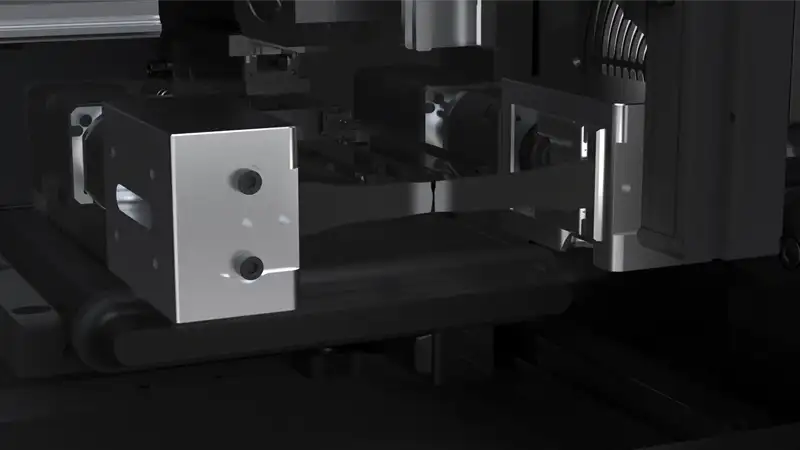
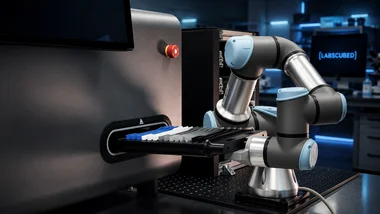
See the LabsCubed robotic arm running this loop.
Which industries use robotic material testing?
Robotic testing systems are used wherever repeatability and throughput matter across many specimens. Labs testing multiple material families benefit most from standardized workflows.
| Industry | Typical applications |
|---|---|
| Plastics | ASTM D638 and ISO 527 testing |
| Rubber & elastomers | ASTM D412 and ISO 37 testing |
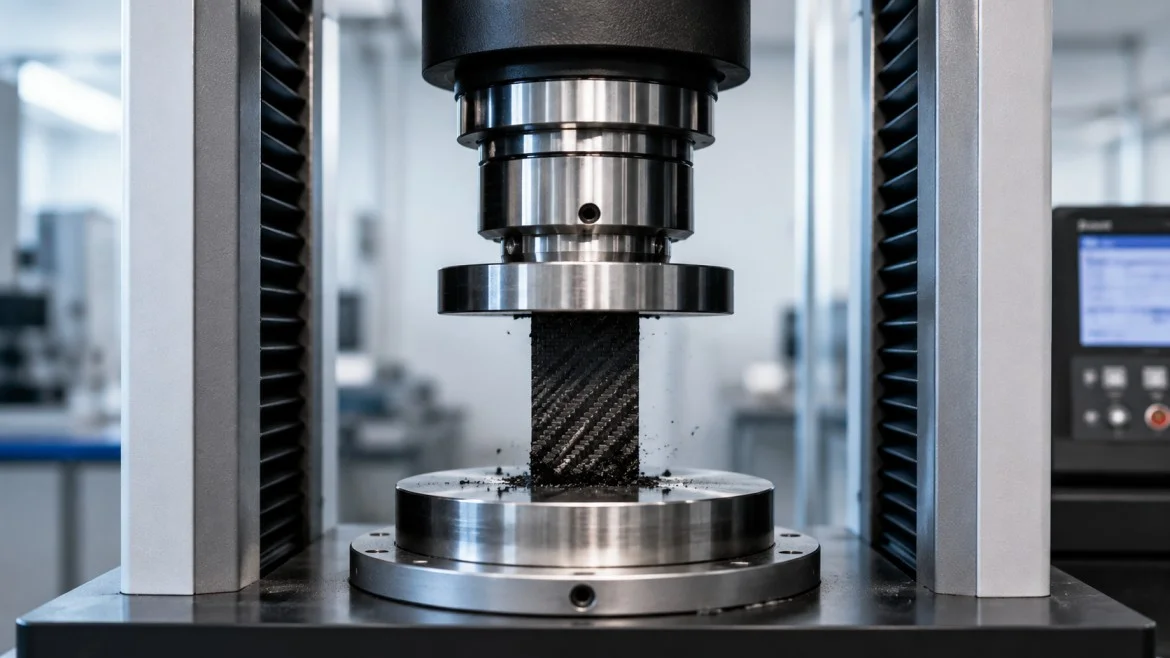
| Composites | ASTM D3039 tensile testing |
| Medical devices | Component and peel testing |
| Metals | Tensile and yield verification |
Manual vs. robotic material testing
The largest benefit is often process consistency rather than speed alone. Reducing operator variability improves data reliability and lowers the need for retests.
| Manual workflow | Recommended Robotic workflow | |
|---|---|---|
| Specimen loading | Manual specimen loading | Automated pick-and-place |
| Alignment | Visual alignment | AI-assisted positioning |
| Reporting | Spreadsheet reporting | Automated data capture |
| Setup | Operator-dependent setup | Higher repeatability |
| Traceability | Manual traceability | Digital audit trails |
| Utilization | Limited utilization | Continuous operation |
What should you look for in a robotic testing system?
The right system should support your standards, materials, and data requirements. Four criteria carry most of the decision.
Standard compatibility
Support for the methods you run — ASTM D638, ISO 527, ASTM D412, ISO 37, ASTM D790, and ASTM D624.
Material compatibility
Different specimen geometries require different gripping methods and handling logic. Confirm the system covers your material families.
Software integration
Look for data traceability, real-time reporting, QMS and LIMS integration, and digital audit trails.
Scalability
As throughput grows, the system should handle higher specimen volumes without increasing operator workload.
How LabsCubed approaches robotic material testing
LabsCubed treats automation as a complete workflow rather than a robotic accessory attached to a testing machine. CubeOne and CubeTen integrate robotic specimen handling, AI-powered vision, specimen validation, grip-seating verification, automated data collection, and digital audit-ready records. The objective is not simply faster testing — it is repeatable workflows from specimen loading to final reporting, with lower operator variability and improved data integrity. For the tensile-specific view, see our automated tensile testing guide.
Frequently asked questions
What is robotic material testing?
Robotic material testing uses automated systems to perform specimen handling, testing, and data collection with minimal operator intervention. The universal testing machine remains the testing platform; robotics automate the pick-and-place, alignment, test execution, and reporting around it.
Which industries benefit most from robotic testing?
Plastics, rubber, composites, medical devices, and metals manufacturing all benefit from improved repeatability and higher throughput. Labs that test multiple material families gain the most from standardized, repeatable workflows.
Does robotic material testing replace the universal testing machine?
No. The universal testing machine (UTM) remains the testing platform. Robotics automate the workflow around the machine — specimen handling, alignment, data capture, and reporting — rather than replacing the load frame itself.
Conclusion
As testing volumes increase, manual workflows become increasingly difficult to scale. Robotic material testing helps laboratories improve repeatability, reduce operator variability, and maintain data traceability by automating specimen handling and reporting. By combining robotics, AI-powered vision, and digital workflows, LabsCubed's CubeOne and CubeTen systems help plastics, rubber, and composite laboratories transform testing from a collection of manual tasks into a repeatable, scalable process.
Automate your testing workflow
Explore how LabsCubed's CubeOne and CubeTen systems combine robotics, AI-powered vision, and automated reporting to create repeatable, audit-ready testing workflows.
Related Articles
More expert insights and practical solutions to advance your material testing expertise.
Automated Rubber Tensile Testing Machines: A Guide for High-Volume Testing Labs
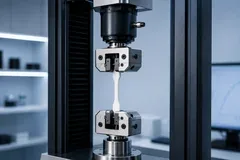
Universal Testing Machine: Complete Guide to Specifications, Applications & Automation
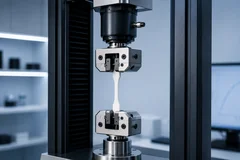
Tensile Strength Tester: A Buyer's Guide for QA Labs
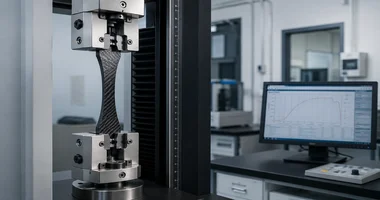
Tensile Test of Composite Materials: A Practical Guide

Universal Testing Machine for Rubber: 2026 Buyer Guide
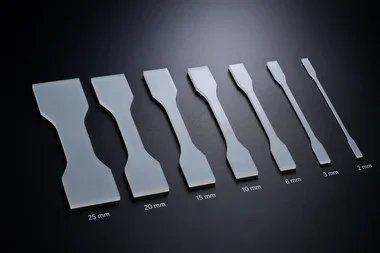
ASTM D3039: How to Test Composite Tensile Properties
Automated Tensile Testing: How Labs Cut Cycle Time Up to 85%
Composite Material Testing: Methods, Standards, and Automation
Tensile Testing Machine Guide for Plastics & Rubber Labs
Polymer Tensile Test: Procedure, Standards & Automation
Polymer Mechanical Testing: Methods, Standards & Automation
Lab Automation Robotics for Plastics and Rubber QA Teams
How to Choose Plastics Tensile Testing Equipment
ASTM D638 Automated Testing: Run 3× More Specimens Per Day
Materials Testing Automation: How Plastics and Rubber Labs Run 3× More Tests Per Shift
ASTM D790/ISO 178 Explained: Everything You Need to Know About Plastic Flexural Testing

Fatigue Testing in Rubber Compounds: Understanding Long-Term Performance
How Temperature and Humidity Affects Tensile Strength in Plastics