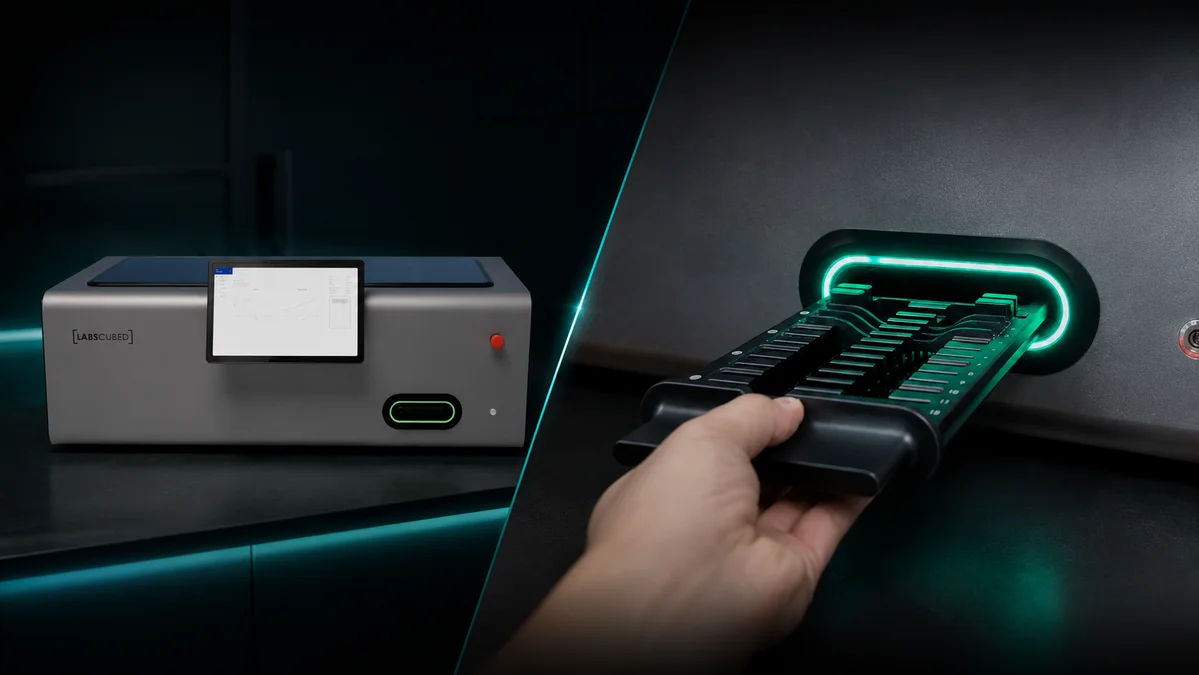
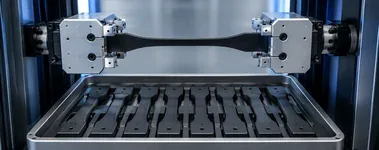
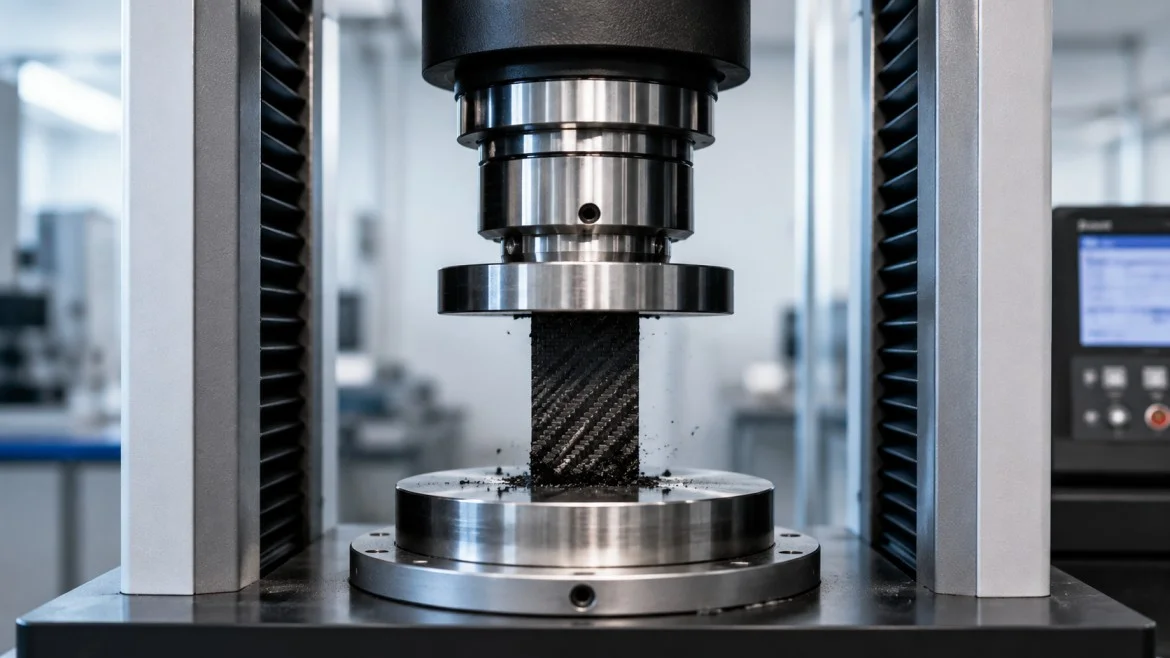
A universal testing machine for rubber is a force-and-displacement frame configured for elastomers — soft grips, low-force load cells, and long-travel extensometry that handle elongation up to 800%. The right rubber UTM removes grip slip, matches your standards (ASTM D412, ISO 37, ASTM D624), and — when automated by LabsCubed's CubeOne — cuts the operator-to-operator variability that quietly distorts QA data.
In this guide you'll learn how a rubber UTM differs from a generic tensile frame, which features actually matter for elastomer testing, where manual operators introduce variability, and how an automated rubber testing workflow changes the math on lab throughput.
What is a universal testing machine for rubber?
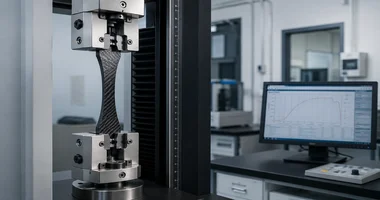
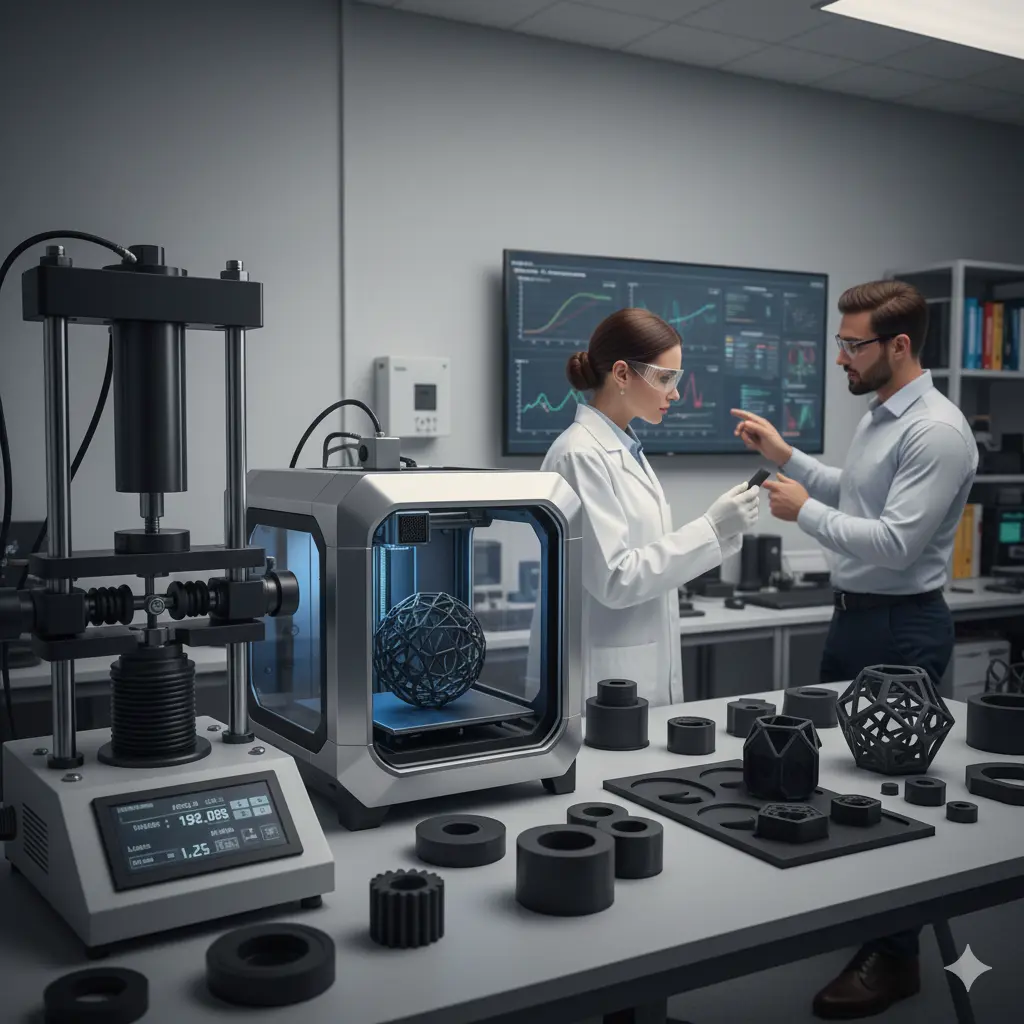
A universal testing machine (UTM) for rubber is a single load frame that performs tensile, compression, tear, and flexure tests on elastomers and rubber compounds. It pairs a precision load cell, motorized crosshead, specimen grips, and an extensometer with software that captures force-vs-displacement data against a chosen standard. For rubber labs, the UTM is the workhorse for batch release, formulation R&D, and customer-spec verification.
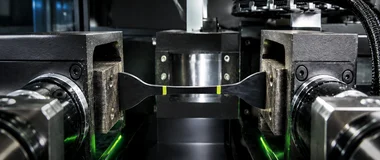
A rubber-specific UTM differs from a generic frame in three places: grips (pneumatic or roller grips to prevent slip on slick, oily, or low-friction compounds), load cell sizing (typically 0.1 kN–5 kN, because rubber dumbbells break at far lower loads than metal or rigid plastic), and extensometer travel (rubber routinely elongates 300–800%, so contact clip-on devices fall off and non-contact video extensometers become the practical default).
Why is rubber harder to test than metals or plastics?
Rubber is harder to test because it elongates farther, slips in grips, and responds non-linearly to strain rate and temperature — so small operator differences create large data differences. Two technicians running the same ASTM D412 specimen with hand-tightened grips can easily report tensile strengths that disagree by 10–15%, depending on grip pressure, alignment, and how they timed the strain rate.
The dominant failure modes when buying the wrong UTM for rubber are:
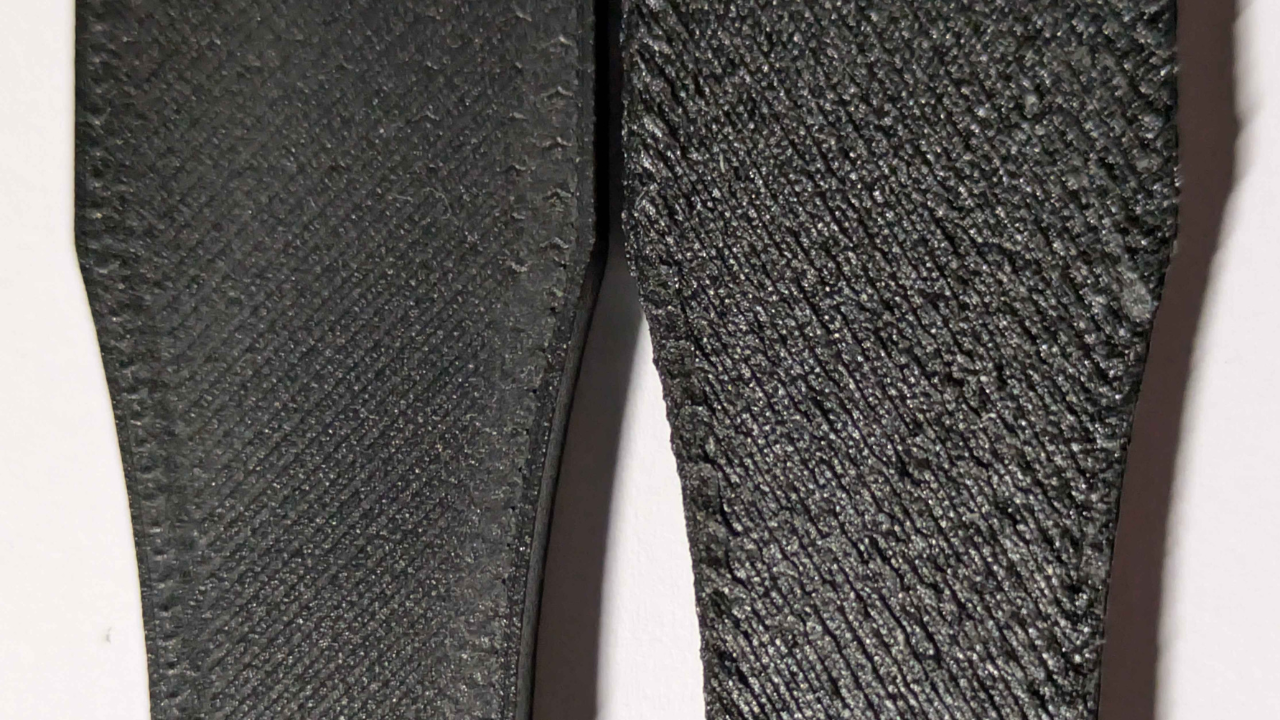
Grip slip — rubber pulls out of standard wedge grips before it breaks, especially on EPDM, silicone, and oil-bloomed compounds.
Load-cell mismatch — a 50 kN frame sized for steel resolves a 200 N rubber break poorly; an accuracy claim of ±0.5% of full scale becomes ±0.5% of 50 kN, which is meaningless at low loads.
Extensometer dropout — rubber dumbbells stretch out of a clip-on extensometer's range; modulus values are wrong by the time the report prints.
Temperature drift — rubber properties shift visibly between 20°C and 25°C, so labs without conditioned specimens get period-over-period drift that looks like a real material change.
Industry guides typically frame UTMs as general-purpose tools. They rarely call out the specific reasons rubber labs see operator-to-operator variability — which is the single biggest improvement target an automated rubber UTM addresses. See our deep dive on fatigue testing in rubber compounds for the long-term performance side of the same problem.
What rubber tests does a UTM perform?
A rubber UTM runs the four test families that cover most QA and R&D needs: tensile, tear, compression set, and bond/adhesion. Each maps to a published standard your customers and auditors expect.
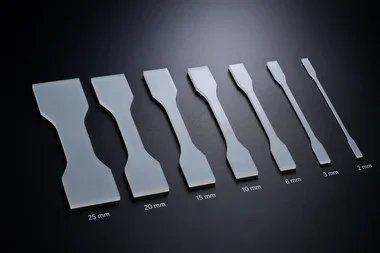
Tensile strength & elongation at break — ASTM D412 (dumbbell or ring), ISO 37. The default rubber release test. Drives the dumbbell-grip-extensometer triad.
Tear strength — ASTM D624 (Die B, Die C, trouser tear). Lower load, fast travel; needs precise crosshead control.
Compression set / compression stress-strain — ASTM D575, ASTM D395 (recovery is measured off-frame after a fixture cycle).
Adhesion to substrate — ASTM D429 for rubber-to-metal; peel tests for bonded layers.
Hardness (ASTM D2240, Shore A/D) is typically measured on a separate durometer, not on the UTM. If a vendor pitches "one machine for everything including hardness," confirm the durometer is a discrete instrument, not a bolted-on probe with reduced precision. For the broader picture across materials, see our tensile testing machine buyer's guide.
How accurate are universal testing machines for rubber?
Universal testing machines typically achieve a force measurement accuracy of ±0.5% to ±1% of the indicated reading when the load cell is sized correctly and calibrated to ISO 7500-1 or ASTM E4. For rubber, the limiting factor is rarely the load cell — it's the extensometer and the grip, which together govern whether your stress-strain curve is real or noisy. A correctly specified rubber UTM with a video extensometer and pneumatic grips can typically reproduce ASTM D412 tensile strength to within 2–3% run-to-run, depending on specimen prep and conditioning.
Manual UTM vs. automated UTM for rubber: which fits your lab?
Below is the side-by-side comparison labs ask for when they're upgrading. The numbers are typical, not guaranteed — your throughput depends on specimen prep, standard, and report complexity.
Manual rubber UTM
Recommended CubeOne / CubeTen
Specimens per shift
40–60 (operator-paced)
Up to 200+ unattended
Grip insertion & alignment
By hand; variable pressure
Robotic load, centered grip
Operator-to-operator variability
5–15% on tensile strength typical
Reduced — robot is the operator
Data capture
Manual CSV, sometimes paper
Direct-to-LIMS audit trail
Unattended operation
Specimen ID & traceability
Hand-entered
Barcode / vision-tracked
The honest read: a manual UTM is fine if you run a few specimens a day and the operator who runs them never leaves. The moment you have two shifts, three operators, or a customer that audits your data, manual rubber testing starts costing more than it saves. That's the systems-level case for automated tensile testing — and why LabsCubed designs robotic frames around rubber's specific failure modes, not generic UTMs.
Common mistakes when buying a rubber UTM
Right-size the load cell. Match typical break load with a 2–5× margin, not 100×. A 50 kN frame buries real rubber data in noise.
Itemize the extensometer. If a quote doesn't call it out, you're getting crosshead displacement — which over-reports elongation because of grip and frame compliance.
Specify rubber-rated grips. Wedge grips were designed for metal. Pneumatic or roller grips with rubber-rated jaw faces should be Day 1, not Year 2.
Trust the system, not the spec sheet. A ±0.5% load cell doesn't matter if specimen prep, conditioning, and operator technique add ±10% on top.
Have an automation roadmap. Buying manual today with no plan for sample handling means a repurchase in 18 months when QA volume doubles.
What does an automated rubber testing workflow look like?
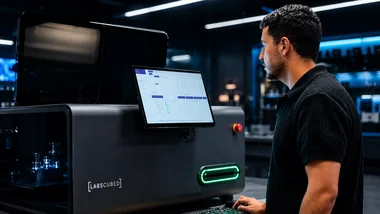
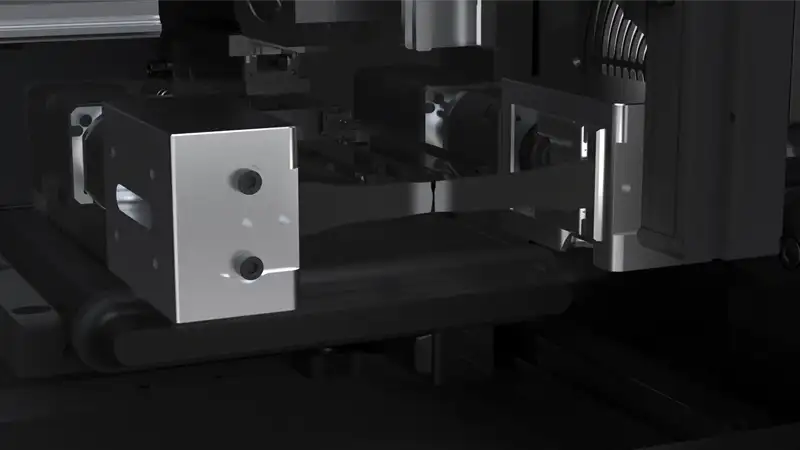
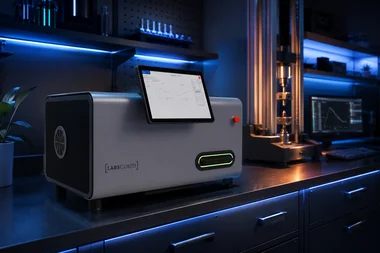
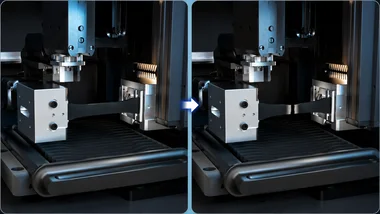
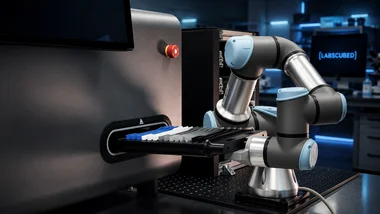
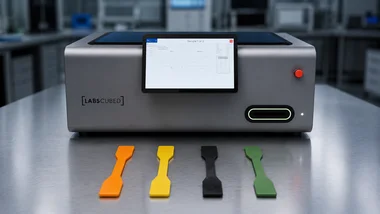
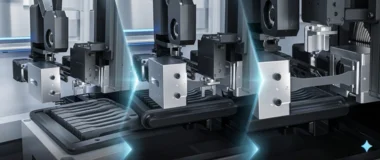
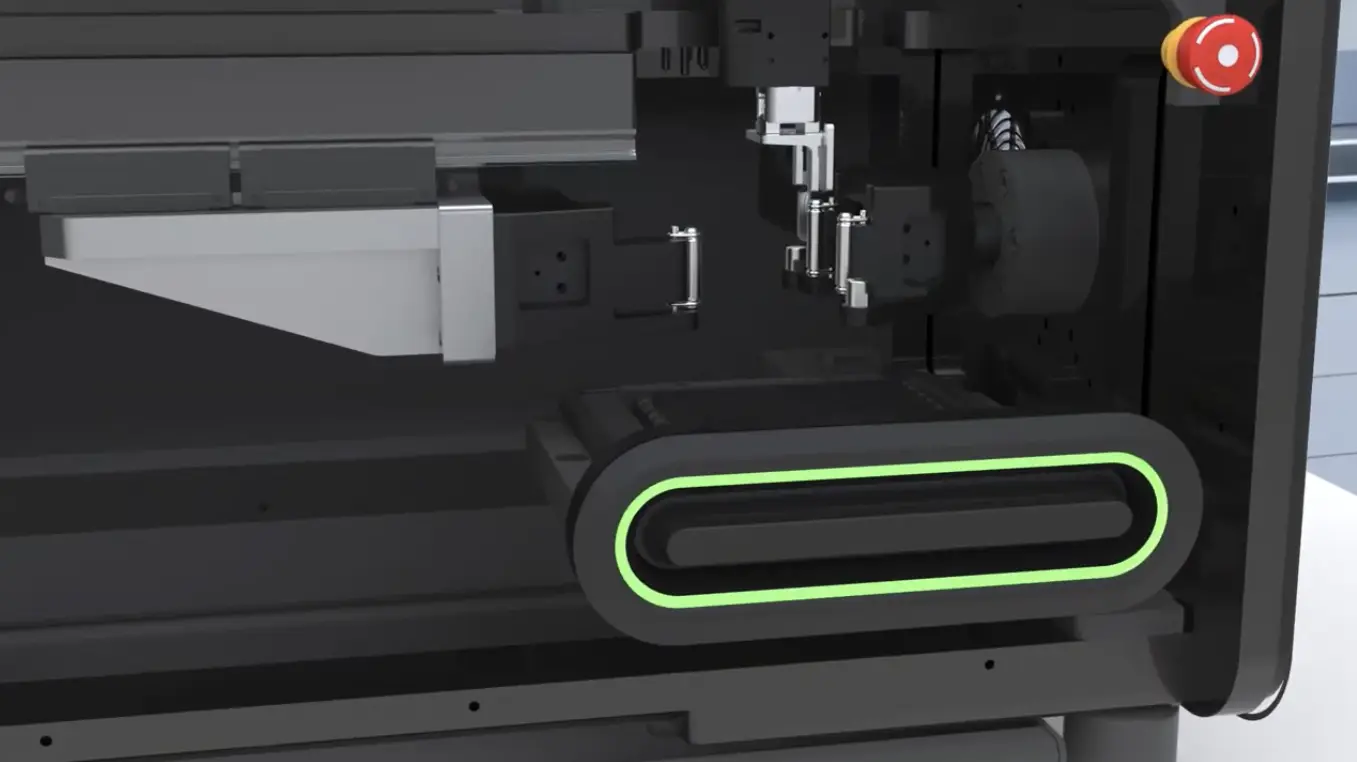
An automated rubber UTM — like LabsCubed's CubeOne for single-frame labs or CubeTen for high-throughput multi-frame cells — closes the loop from specimen tray to LIMS record. A typical flow: dumbbells are loaded onto a tray, the robot picks each specimen, places it in pneumatic grips with consistent jaw pressure, the test runs against the chosen standard (D412, ISO 37, D624), a video extensometer captures elongation through break, and the result lands in your LIMS with the specimen ID, batch number, and full force-displacement curve attached.
The visible win is throughput. The bigger structural win is that the robot is the operator — so your Tuesday data looks like your Thursday data, even when your senior tech is on PTO. See LabsCubed's ASTM D412 / ISO 37 rubber tensile workflow for the standard-by-standard operating model, and our robotic material testing overview for how the same architecture extends to plastics and composites.
FAQ
What is a UTM machine used for in a rubber lab?
A UTM in a rubber lab measures tensile strength, elongation at break, tear resistance, and compression behavior of elastomers against standards like ASTM D412, ISO 37, and ASTM D624. It is the primary instrument behind batch release, customer-spec verification, and R&D formulation work, and it captures force-vs-displacement data that feeds quality records and LIMS.
How accurate are universal testing machines?
Universal testing machines typically report force accuracy of up to ±0.5% to ±1% of the indicated load when calibrated to ISO 7500-1 or ASTM E4. Real-world test variability is usually larger because of specimen prep, conditioning, grip slip, and extensometer choice — so a system-level view matters more than the load-cell spec alone.
What is the method of rubber testing on a UTM?
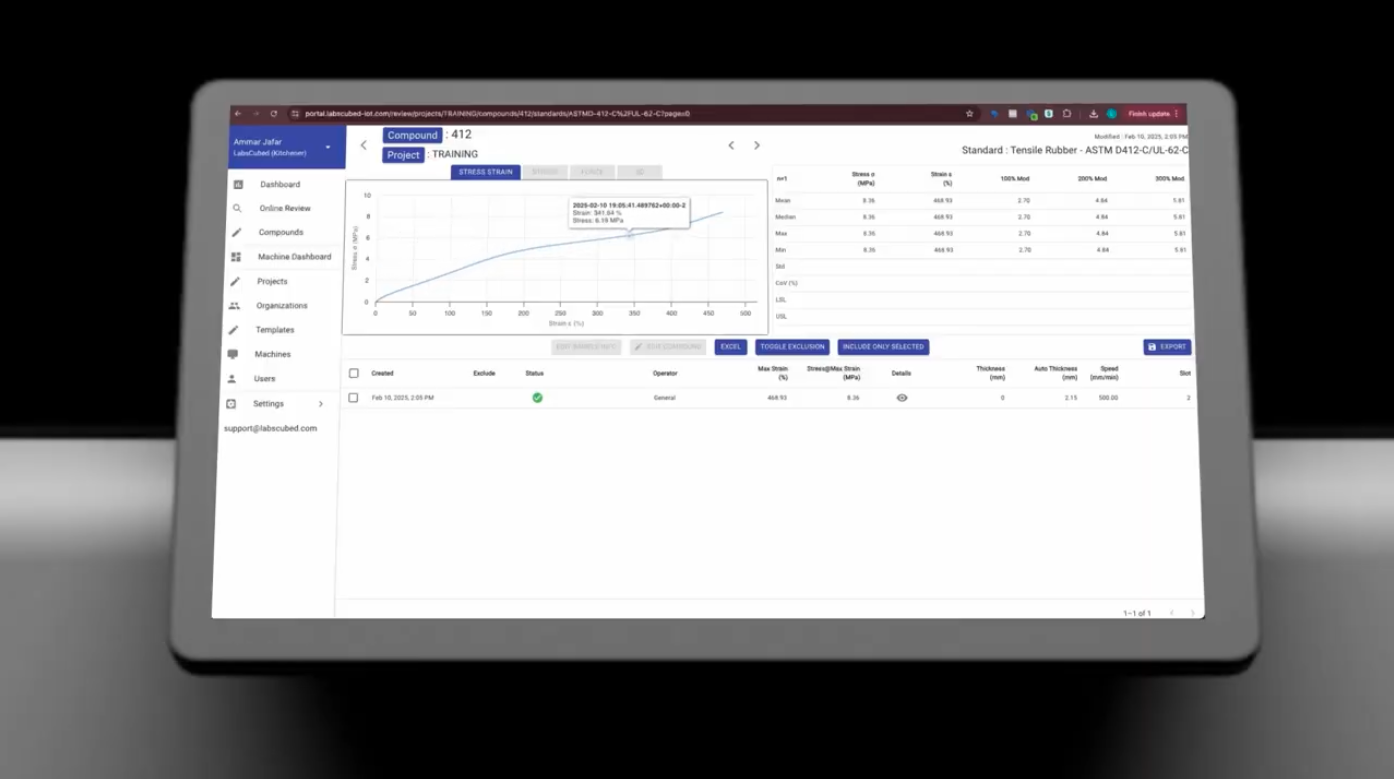
The standard rubber tensile method follows ASTM D412 or ISO 37: a die-cut dumbbell is conditioned, mounted in pneumatic grips with consistent jaw pressure, pulled at a defined crosshead speed (typically 500 mm/min for Type C), and tracked by an extensometer until break. The frame records peak load and elongation, and software computes tensile strength, modulus, and elongation at break.
What is a typical universal testing machine made of?
A typical UTM consists of a load frame, a calibrated load cell, a motorized crosshead with a precision drive (ball-screw or servo), specimen grips, an extensometer, and control software. For rubber, the configuration shifts toward lower-force load cells, pneumatic or roller grips, and a non-contact video extensometer that can follow elongations of 500% or more.
Can a universal testing machine for rubber be automated?
Yes. An automated rubber UTM uses a robotic specimen handler to load dumbbells, set grip pressure consistently, run the test, and log results directly to LIMS — removing operator-to-operator variability. LabsCubed's CubeOne and CubeTen are built around this workflow and can run unattended overnight, which typically lifts daily throughput from 40–60 specimens to 200+ depending on standard and report complexity.
How much does a universal testing machine for rubber cost?
A manual rubber UTM is typically in the US$15,000–US$60,000 range depending on load cell, grips, and extensometer. An automated cell with robotic handling and LIMS integration scales above that and is usually justified by throughput, traceability, and reduced rework — not by replacing the frame itself.
Ready to compare manual and automated rubber testing for your lab?
If your rubber QA is hitting operator variability, audit pressure, or a capacity ceiling, the next step isn't a bigger manual frame — it's an automated workflow. See our rubber testing solution built on the CubeOne platform.
The LabsCubed team builds robotic, automated testing systems for plastics, rubber, and composite labs. Our engineers work directly with QA managers, lab directors, and ASTM committee members on real production workflows.
More expert insights and practical solutions to advance your material testing expertise.
Tensile Testing
Lab Automation
6 min read
Automated Rubber Tensile Testing Machines: A Guide for High-Volume Testing Labs
Learn how automated rubber tensile testing machines improve throughput, repeatability, and ASTM D412 compliance in modern testing laboratories.
Tensile Testing
Lab Automation
9 min
Universal Testing Machine: Complete Guide to Specifications, Applications & Automation
Learn how a universal testing machine works, what tests it performs, key specifications to evaluate, and how automation improves materials testing workflows.
Tensile Testing
Lab Automation
9 min
Tensile Strength Tester: A Buyer's Guide for QA Labs
Choose the right tensile strength tester for plastics or rubber QA. Compare manual vs. automated systems, key specs, and ROI. Get a quote from LabsCubed.
Testing Standards
9 min
Tensile Test of Composite Materials: A Practical Guide
Tensile test of composite materials made simple: specimen prep, fixtures, standards, and how automation cuts variability. See the guide and run cleaner tests.
Testing Standards
9 min
ASTM D3039: How to Test Composite Tensile Properties
ASTM D3039 measures composite tensile properties. See specimen prep, grips, automation, and how Cube cuts variability. Get a demo from LabsCubed today.
Tensile Testing
Lab Automation
7 min read
Robotic Material Testing: The Complete Guide to Automating Your Lab
Learn how robotic material testing improves throughput, repeatability, and data traceability in plastics, rubber, and composite laboratories.
Tensile Testing
Lab Automation
6 min read
Automated Tensile Testing: How Labs Cut Cycle Time Up to 85%
Learn how automated tensile testing improves throughput, repeatability, and data traceability in plastics, rubber, and composite testing labs.
Tensile Testing
Lab Automation
6 min read
Composite Material Testing: Methods, Standards, and Automation
Learn the key composite material testing methods, ASTM standards, and how automation improves throughput, repeatability, and data quality.
Tensile Testing
Lab Automation
6 min read
Tensile Testing Machine Guide for Plastics & Rubber Labs
Learn how to choose the right tensile testing machine for plastics and rubber, and how automation improves throughput and repeatability.
Polymer tensile test guide: ASTM D638, ISO 527, dog-bone specimens, common mistakes, and how automation cuts operator variability. Get the full procedure.
Learn polymer mechanical testing methods, ASTM standards, and how automated systems like LabsCubed's Cube reduce variability in plastics and rubber QA labs.
Lab Automation
9 min
Lab Automation Robotics for Plastics and Rubber QA Teams
Robotic lab automation is changing how plastics and rubber QA labs operate. Learn how to automate ASTM tests, cut variability, and scale testing throughput.
Tensile Testing
Testing Standards
4 min
How to Choose Plastics Tensile Testing Equipment
A practical guide for QA labs on choosing plastics tensile testing equipment—covering force range, grips, standards, and when automation pays off.
Tensile Testing
Lab Automation
4 min read
ASTM D638 Automated Testing: Run 3× More Specimens Per Day
Learn how automated ASTM D638 testing systems help plastics labs triple specimen throughput, eliminate grip errors, and run tests unattended overnight.
Lab Automation
4 min read
Materials Testing Automation: How Plastics and Rubber Labs Run 3× More Tests Per Shift
Discover how materials testing automation helps plastics and rubber labs reduce manual errors, triple throughput, and meet ASTM standards — without adding headcount.
Flexure Testing
5 minutes
ASTM D790/ISO 178 Explained: Everything You Need to Know About Plastic Flexural Testing
Mastering ASTM D790 & ISO 178: Why the Future of Flexural Testing is Horizontal
Stop wasting time on manual grip changes and calibration. Learn the essentials of plastic flexural testing and discover how CubeFlex is revolutionizing the lab with automated, horizontal 3-point bending.
Lab Automation
10 min
Fatigue Testing in Rubber Compounds: Understanding Long-Term Performance
Explore the fundamentals of fatigue testing for rubber compounds, from traditional to 3D printed materials. A guide for materials engineers and lab managers on ensuring long-term performance and durability.
Data
9 min
How Temperature and Humidity Affects Tensile Strength in Plastics
Discover how environmental conditions like temperature and humidity impact the tensile strength of plastics, including 3D printed parts. Essential insights for R&D managers and lab supervisors in plastics testing.
Data
7 min
Understanding the Numbers: Tensile Data Collection and Saving Time with Automation
This article explains the importance of understanding and utilizing tensile testing data for better material selection. It highlights how raw test data, particularly the stress-strain curve, provides crucial material properties like ultimate tensile strength, yield strength, elongation at break, and Young's Modulus.
Lab Automation
8 min
What is Tensile Testing & Why it Matters in Materials Labs
This article introduces tensile testing, its applications, common laboratory challenges, and practical solutions for obtaining accurate results.
.webp)